Essays

I am a heading

Here goes your text ... Select any part of your text to access the formatting toolbar.

Here goes your text ... Select any part of your text to access the formatting toolbar.

The ‘Fake Roley’ by Shelter Serra is a simple, eye-catching work of wearable art. More wrist-piece than timepiece. It’s for those who instinctively know that the time is always now or that Happy Hour is every hour above ground. It’s an accessory for those who calmly measure life one day at a time instead of frantically fussing minute by minute. For the man or woman who couldn’t care less about being late to the airport and missing a flight because they know there’s always another plane standing by; but, more, they can hear the universe whispering they shouldn’t be on that flight anyway. The ‘Fake Roley’ wasn’t created to remind one of life’s fleetingness, impermanence; it will never make you anxious or worried someone will try to steal it. In fact, its alluring appeal conveys intrigue, mystery, and, perhaps most saliently, hilarity, all of which begets dialogue with anyone who sees it. This is an objet d’art humming with nonconformity yet pulsating as all great art does with a magnetic pull—tugging on humanity’s primal energies to unite and bond over life’s simpler pleasures; connecting souls via a common denominator of welcomeness, not exclusion. Almost like a faux faux Rolex, as in, you can have and not have this item too. 

More so, the ‘Fake Roley’ is crafted for those who roam the planet by the beat of their own drum and can do so without the need of synchronized moon or sun dials because their inner mechanisms are heavily imbued with primordial circumnavigatory sensors translated through the gut or intuition. For individuals who howl at full moons and seek the warm embrace of the sun, and who know the most important hours between sunrise and sunset or between sunset and sunrise are the hours spent moving forward because their DNA is wound in only one direction; for kindred spirits who intuit looking back, or procrastinating or waxing poetic on the past. The wearer of this timeless accoutrement stands not still. Nor alone. They are members belonging to a tribe of adventurers, free thinkers, and doers who never complain and who always take action. Sitting idle is not in their playbook. When they look down at the ‘Fake Roley’ they are reminded there is no time to waste, no time to hate, no time for nonsense. For the ebb and flow of the tides, the changing of the seasons, the birthing and passing of life from one generation to the next since time immemorial are the principal magics of being, and the flow of time is best observed with a fistful of joy, gratitude, and unflinching humor. -de la Haba

Buy on Amazon

I am a heading

Here goes your text ... Select any part of your text to access the formatting toolbar.

Here goes your text ... Select any part of your text to access the formatting toolbar.

Prologue

Nestled in an alcove of a large Victorian home shared with extended family (cousins, aunts, uncles, etc.,) was a twin bed. His own private room of sorts with a French window at one end of the bed looking over LA’s storied twenty-first street. A young Gary Wong would open the window, climb outside, and sit on the roof to “observe and listen.”  Two Holy Roller Churches stood on opposite corners. “The magic,” said Gary, “was when the music from both congregations overlapped. It was the mesh that got me.”  A little bit up the street was The Big Room, a community center consisting of one large room and a loud jukebox. “Now with the jukebox playing and the churches singing, I had all three things going on at once. And if I was really lucky, sometimes the Mexicans around the block had a quinceañera with a Mariachi band playing but that was once in a Blue Moon.  But to have all four elements happening at once, at the same time, it didn’t make any sense but it was all a cacophony of wow. It was a beautiful thing.”

Introduction

The word enigma was first coined not to categorize people or things but used as an identifier to words.  Specifically, to words that challenged a person’s capacity to decipher the hidden meaning behind them. In fact, the Greek equivalent for enigma, ainissesthai, literally means “to speak in riddles.” Contrary to what his mystifying word paintings may suggest, infer, or hum, Gary Wong does not speak in riddles. His soft spokenness, delivered as if construed premeditatively, comes accompanied with a glare of fierceness and certainty. Yet there exists a cautionary air to his laid-back demeanor. 

In the L.A. of his youth, from the confines of his “yellow, brown, and black neighborhood,” being part of a gang was de rigueur and the street rules facilitated a do or die mentality. Often, choices were twofold: either make a run for it or stick around and find out. The stick around option was often fatal. By the time Gary was fourteen, he was witness to nine murders. One being the father of his friend. Killed by the friend’s mother. Stabbed to death at the front door of the home they shared across the street from Gary’s where the two young boys happened to be sitting, watching, on the front porch. The alcove overlooking the street became more than a place to sleep. It was a birds-eye-view retreat from the unsettling madness that prevailed curbside, a place to grab-hold L.A.’s comforting din and envisage the world far beyond the pale of his youth. A perch which afforded the ruse of separation. Gary would never see his friend (or his friend’s mother) again; to him, “They just disappeared. The illogical sequence of events–the murder and the disappearance thereafter–left an indelible mark on the young Mr. Wong’s perception of reality that he’d soon learn had always been strange and yet, to an even greater degree, would become dramatically more peculiar. Nothing was as it seemed.  

Opening Act

Wong’s story is a long and circuitous one. It begins a century and half before he was born with his Chinese great-grandfather’s arrival on American shores at the age of twelve to meet up with an uncle and cousin who already lived in San Francisco. A year later, all three were living in Northern California near the border of Oregon at a place called Happy Camp along the Klamath River working on gold-dig sites. Among other derogatory things, the Chinese workers were called Powder Monkeys because they were the ones who lit the dynamite that made mining for gold possible. The Wong family’s first American lesson: being expendable.

Born in Oakland, CA in 1944, his mother’s parents were Elders in the Korean Presbyterian Church and ran a Single Room Occupancy Hotel, bathhouse, and barbershop in Oakland. His father’s family had a restaurant and bakery in San Francisco’s Chinatown. His Chinese-American-born father was a veteran of World War II and after the war took full advantage of the GI Bill becoming, according to Gary, “a middle-class American as a Dental technician. In 1948, the family moved to Los Angeles for better opportunities and began living on 21st street, a well known street in the Chinese-American community because it was one of the first neighborhoods outside of L.A.’s Chinatown that Chinese-Americans (along with Blacks, and Latinos) were allowed to buy a home. This was post World War II and as Gary points out, “it was the old LA, before skyscrapers, freeways and when the streets were less jammed with cars; before the Dodgers and when the theaters and movies were all grand.”

In perhaps overdetermined fashion, Gary’s early years were marred by mockery and exclusion on top of the already prevalent racism and prejudice that existed. Firstly, he was made fun of for being Asian, and secondly, scrutinized for being mixed race: half Chinese, half Korean. Then there was the constant bullying for being the youngest in his crowded house as well as for being the smallest at school which, due to his birthdate, ensured he was developmentally behind. The early grammar school head-start proved more detrimental than advantageous. As was the luck-of-the-draw with a last name beginning with the letter “W” in alphabetically inclined rules regimes.  As such, Wong was always relegated to the back of the class, which made seeing and hearing more difficult. Interestingly, he somehow always wound up sitting next to his classmate, Barry Eugene Carter. Better known as the legendary bass singer, Barry White.   

At school, they forced Gary to switch from writing with his left hand–as he did naturally–to using his right hand, unnaturally. A common malpractice of the time. At home, Gary was scolded for using his chopsticks with his left hand.  A cultural no-no in whose enforcement Gary’s dad was adamant.  From the get-go, his natural rhythms and flows were challenged, demonized, censured. Once, a schoolmate came over to his easel and began pointing and giggling at his painting. Soon the entire class was laughing at Gary’s landscape including the teacher. He was ridiculed for “not making the grass green, the sky blue, or the sun yellow,” as nature seemed to be interpreted by the rest of them. Conversely, Gary’s DNA was exactly as God intended, who fashioned the young, budding artist colorblind. A trait that could not be undone. 

Nothing seemed to congeal easily or satisfactorily for Gary except for the sounds that he experienced along 21st street. Even a fun night out in high school to see James Brown perform at the Five Four Ballroom turned into a life-altering macro-lesson. Upon arrival, the concert was already sold-out. Gary chose to stick around so as to “watch and listen” to the outpouring of energy for Mr. Brown overflowing onto the street. With Gary, life was better first digested and analyzed visually and auditorily. Sure enough, “a shootout started to go down.”  As Gary made a bolt for it, a realization occurred that in order to survive in this town he had to be like wallpaper. He needed to blend in.  

Ingratiating himself into gang life provided an element of blending-in and safety early on. But in reality, it was a false sense of security. A misguided belief of protection.  Gangs stuck together proving, surely, the old adage safety in numbers. But gang culture countered what Gary was beginning to figure on his own: It was a lifestyle that enabled and encouraged wrongdoing.  Like drug use. Gary started to sling in High School.  An addiction to heroin and barbiturates ensued, probably factoring in to his chances of getting jumped one night on the way to a party. As he broke free and ran, the diminutive Gary was shot at. A chilling moment when fear, and not just heroin, seeped into his pumped-up veins. He needed an out more than ever. 

Music had always heartened his spirit, inspired him to sing. And if he heard Jackie Wilson (his first live concert in 1958) on the radio or if Jimmy Reed was playing on the jukebox inside The Big Room, Gary believed the music belonged to him.  Others, however, gave him an attitude for thinking so. “Music was territorial back then,” he said, and he was told often enough it wasn’t his music to sing–it was our music, they’d say. As it turned out, only God got in the way of Gary’s singing. He had hoped admission to the local church choir would make for great diversion from life on the streets. His voice wasn’t the problem. At issue was his inability to read the music. The notes on the page–to Gary–were illegible, a mishmash of obscure markings that “rolled and tumbled off the page. He didn’t know it at the time, but Gary suffered from dyslexia and was asked to leave the choir. More humiliation. More wondering where to turn. His ineptitude in reading the Gospels and Hymns fell mute on God’s ears. 

The world appeared at odds with Gary Wong–and it caused him great anguish. In an interview, Gary reminisced: “I was always miserable.  His mother often warned him he’d trip over his frowning lower lip because he never smiled. His experiences amounted to lines drawn in the sand dictating a harrowingly narrow bounds. More and more, Gary started seeing himself as an “outlier” on the fringe of L.A.’s already segregated yet burgeoning scene.

Music filled a void that was metastasizing by the day. And perhaps apropos,  it was the Blues in particular, a breed of music that plumbs deep into the well of memory and trauma and beyond, where the most profound of human emotions linger, that Gary gravitated towards most. As Wong was gaining a truer sense of the depths of his own well, rooted in all the agony and struggles and legacies of his past, and despite issues with reading comprehension and color vision deficiency, the young artist would discover new realms of creative expression that enter not through the frontal lobe or any cortex of the brain, but through the primordial pathway of the soul. And the portal by which they become accessible is pure unfiltered emotion. Over time, Wong would develop an arsenal of musical expressions. For one, he can shred on the harmonica, a simple but powerful instrument that responds to selective breathing, blowing, and phraseology with a powerful degree of utterance complementary to sung lyrics. He also learned to play guitar by ear, and, of course, to sing. To hell with the church choir. His blues heroes, Junior Wells and Magic Sam, were long haul players like himself and, like Gary Wong, were full of swagger and stomp. Survivors who sing and play their guts out. 

All the while, there was his two-dimensional art taking shape with his drawings and paintings. On Saturdays, he’d take art classes at the county museum, and during one of his forays into Venice Beach saw the words Art is God Is Love painted on the side of a building. This, he thought, was an attestation, a sign on how to live. The writing was indeed on the wall and those words became his mantra.  His job moving forward was to find his own “visual” to paint and scrawl for others to see. A promising moment decreeing direction and enabling fortitude.  

Intermission

Before delving into his mature painting style, it is important to state some other key moments in his decades-long career that contributed greatly to Mr. Wong’s  oeuvre. A brief summary: 

His first year of community college was cut short due to withdrawal issues. Gary suffered from “the jones.”  By 1963 he was attending the Chouinard Art Institute with fellow Angelenos, Chaz Bojorquez (Señor Suerte), John Van Hamersveld, and Norton Wisdom. He took classes with Emerson Woelffer, a prominent Abstract Expressionist painter who had previously taught at Black Mountain College; and Matsumi Kanemitsu, a master printmaker also affiliated with the AbEx movement. In 1965, Gary married and, subsequently, got involved in protests associated with the Watts Riots (or Watts Rebellion), an important year in the annals of L.A.’s Civil Rights movement that sought an end to Police mistreatment and the rampant discrimination in housing, schooling, and employment. Gary was unable to finish his degree at Chouinard for extended absence following a temporary incarceration. In 1966 he and two fellow Chouinard alums, Terry Allen and Ron Cooper, ran an experimental gallery called GALLERY 66 for half a year. During this time, he also formed his first blues band, The Black Wall Blues Quintet with Terry Allen on drums. 

From its founding in 1967 until 1968, Gary was the MC for Pinnacle Concerts and introduced Los Angeles to some of the most iconic music acts of all time including The Who, Jimi Hendrix, Lou Reed, Cream, The Doors, Janis Joplin, The Yardbirds, The Grateful Dead and more. But of particular interest to Gary’s art-life story is the fact that he was responsible for booking all the black acts for Pinnacle: Junior Wells and Buddy Guy, Magic Sam, Albert King, 

Sly and the Family Stone, Ike and Tina Turner Revue, Wilson Pickett Revue, and Charles Lloyd among them. 

In the late 1960’s to Mid 1970’s, Mr. Wong affiliated with PASLA (Performing Arts Society of Los Angeles), directed by Vantile Whitfield who went on to direct the National Endowment for the Arts. 

In the mid 1970’s, Wong participated in collaborative art events organized by Studio Z  (a.k.a. LA Rebellion) the brainchild of David Hammons (whom he first met at Chouinard in the mid 60’s) along with Senga Ngudi, Maren Hassinger, Ronn Davis, Duval Lewis, RoHo, Franklin Parker, Barbara McCullough, Houston Cornwill, and Joe Ray. 

In the 1980’s, Wong worked as an art installer with Cooke’s Crating, and, later in 1988, started his own company, Crate 88, which lasted nearly ten years.

In 1985, a defining event occurred at The Burnside Inn in Los Angeles: During a live jazz session, the MC asked if anyone in the audience could sing some blues. Spurred on by a friend, Gary approached the stage.  When the host asked him his name he paused. At that moment, all his life seemed to flash before him. After a long pause, he replied, “Charlie Chan.  The crowd erupted in laughter.  For Gary, this was no joke. Charlie Chan was the pseudonym used (for contractual reasons) for Charlie Parker on Miles Davis’ 1956, Collectors’ Items album. But so too was it a riff (unintentionally, perhaps) of the poorly aged, Hollywood-cinema stereotype of the wise yet suspicious Chinaman that emerges from the Western frontier mindset, rife with racial picaresques steeped in otherness. Was this the reason they laughed? 

As Wong matured, he began digging deeper into his status as an outsider. His blues portrayal is a complex moving target, deeply mired in politics of identity as well as the pathos and lingo of the music itself, a uniquely American art form that has the power of persuasion and moves those who fall under its spell. Wong understands that the Blues are not just about sadness, or being down and out. They’re about owning all the emotions life yields and putting them at the best advantage to move others. The Blues teaches us what it means to be human. Inadvertently, Gary Wong became a disciple who found a way to school others in the genre’s magical light.   

Act 2

What his eyes lacked in interpreting color, his ears made up for in hearing tone and differentiating nuance in sound. And his dyslexia was compensated with and complemented by an uncanny ability for musical and creative improvisation, both on stage and in the studio. The musicality of sounds first heard and observed from the alcove above 21st street can be seen as his first call and response moment, his tutorial in life’s auditory overtures (God’s signaling)– in comprehending dissonance, in layering, and in harmonic overtones–where the illogical spontaneity of life’s theater sounded perfectly logical and orchestrated. The alcove sessions became the foundational impetus for his trajectory into a life filled with moving sounds and impactful visions. 

The Roman statesman and philosopher, Marcus Cicero, would have referred to Gary’s paintings as silent poetry. They are the non-verbal, pictorial equivalent of the blues; a visual vernacular of pure expression through feeling life intensely and celebrating that through joy, sadness, or rage. Each stroke of the brush details an emotional gravitas belonging to a poet’s ability of transforming the mundane into art.   

We refer now to Wong’s paintings, with a few examples. These are not large works, often on heavy, single-sheet, Arches paper, or canvas, and they provide an incantatory visual effect vis-à-vis the pictorial dissimilation of words and frenetic sentencing that separately (unto themselves) go nowhere in the literal sense but roll and tumble off the page in an E.E. Cummings, creative-license-to-reinvent sense. They are painted writings not dissimilar to a poorly crafted run-on sentence but encapsulate the visual equivalent of euphonic verse purposefully rendered to dizzying effect. They are hypnotic ensembles of mesh, an interlacing of typeface that weaves together the same calligraphic power and melodiousness as a treasured medieval manuscript. The Book of Kells, a masterwork in Western Calligraphy, comes to mind. On that note, Wong’s unique font has some semblance of Chinese Calligraphy (Character Writing) fused with Cholo, a west coast style of gang graffiti perfected by Gary Wong’s contemporary, Chaz Bojorquez, the renowned Godfather of Cholo writing. But especially rare is his natural inclination, his rhythmic fluidity, of writing backwards from left to right–like the Renaissance, left-handed maestro, Leonardo DaVinci. Some habits never die.

These painted works also recall ancient palimpsests encoded with something familiar. Due to their masked readability, they appear rather foreign, distant, yet reverberate an emotional effect that hums and awes. What they lack in color they make up for with vibrations. Here are musings of a Bluesman strumming his brush not between “downstroke” and “upstroke” but by casting words-as-markings more akin to hieroglyphs, pictured across the page in linear, exacting precision. The beat is played symbolically via repetition while harmony enters the picture through overlappings, creating a shadowy, three-dimensionality to the work. Tone and color are more subdued, desaturated and in grayish hues or swaths of pure black (ink) and white (paint). Painted refrain and poetic discernment not dulled or impaired by a blurred retina nor from a dampened cerebral cortex. They are masterworks that pack a punch to the viscera. The ink and paint bleed like residual stains of a crime scene; the paper’s pulp embedded with ethereal evidence lifted from humanity’s morbid existence, cutting like scars across the page yet seem to imply: carry on and move forward: keep strumming, keep rock and rolling. His alphabet soup of cacophony has become his “wow.” 

They are the visionary manifestations of his iconicity. Synesthetic sonatas of dueling modalities. Pure art that, paraphrasing Aristotle, has been concerned not with things as they are, but with things as they might be and ought to be. 

Closing Act (The Epilogue) 

A favorite poem of Gary’s is “Chinese Banalities” by the German artist, Kurt Schwitters (1887-1948). Gary’s comprehension of Schwitters’ work is perfectly logical. A Dadaist painter and writer, Schwitters combines seemingly unrelated elements, themes, and words in his work which allows for the reader to figure out whether or not there’s any cohesive meaning. The Dadaists, of course, were all about turning the status quo (politically, socially, culturally) on its head, just as what Gary was arrested for doing in the 1960’s. In the poem, Schwitters writes: 

Even for someone without dyslexia the above can come across as a bit of a mind fuck. But for Gary, the simplest of syntax can read like a complex jig-saw puzzle, scrambled.  He must delve deeper than the rest to comprehend and piece together meaning and to assist in helping decipher his own entangled reality. Overtime, Gary has approached each painting as a clean slate, a new beginning. Each work is another opportunity to start over, beginning to end and back again.  As such, he refers to each blank sheet of paper as “surface zero. And zero is where, philosophically, nothingness and paradise coexist peacefully. A most perfect springboard to approach art with no burden to a finite end, or with an anxiety for its beginning.  

History was once described as “one god-damn thing after the next.” Ulysses S. Grant, to whom those words are attributed, was witness to man’s ultimate brutality and knew full well the exacting toll, the consequences, of what coming out on the other end of battle can do to a man. Surviving is not an easy task. To lay blame, play victim or fade away entirely from engagement are alluring choices, tragically, for many. Thankfully, the universe ordained a select few capable of separating the wheat from the chaff to highlight the magnificence of life. Artists like Mr. Wong, whose marked impressions of the past have become transformational catalysts that over time, through trial, error, and tribulation, are woven flawlessly into rhapsodic eulogies of song and paint. 

Encore

Along with SoCal artists Dave Tourje, Chaz Bojorquez, John Van Hamersveld, and Norton Wisdom, Gary Wong formed a collective art existence under the name California Locos and has exhibited in a number of important exhibitions regularly since 2014.

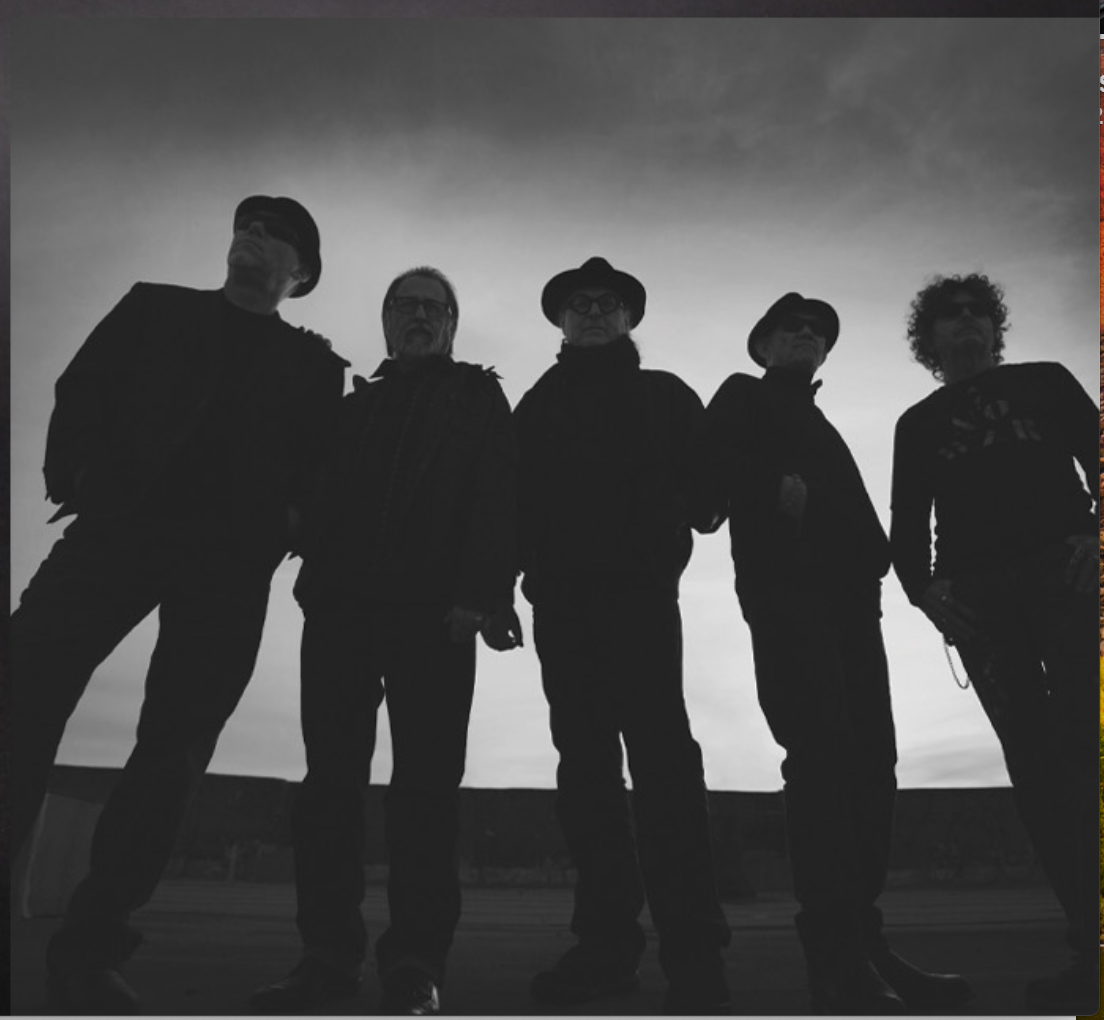
And in 2019, long after the audience took note of his legitimacy as a Bluesman after having a laugh at his expense in reaction to the introduction of Charlie Chan, Gary Wong and his band, the SOBs, received a Certificate from The City of Los Angeles during the First Watts Festival memorializing him as a Living Legend for his and their commitment to emotional complexity, perseverance, the weaving of experiences–put simply, the Blues. 

                                                                                              —de la Haba

Buy on Amazon

I am a heading

Here goes your text ... Select any part of your text to access the formatting toolbar.

Here goes your text ... Select any part of your text to access the formatting toolbar.

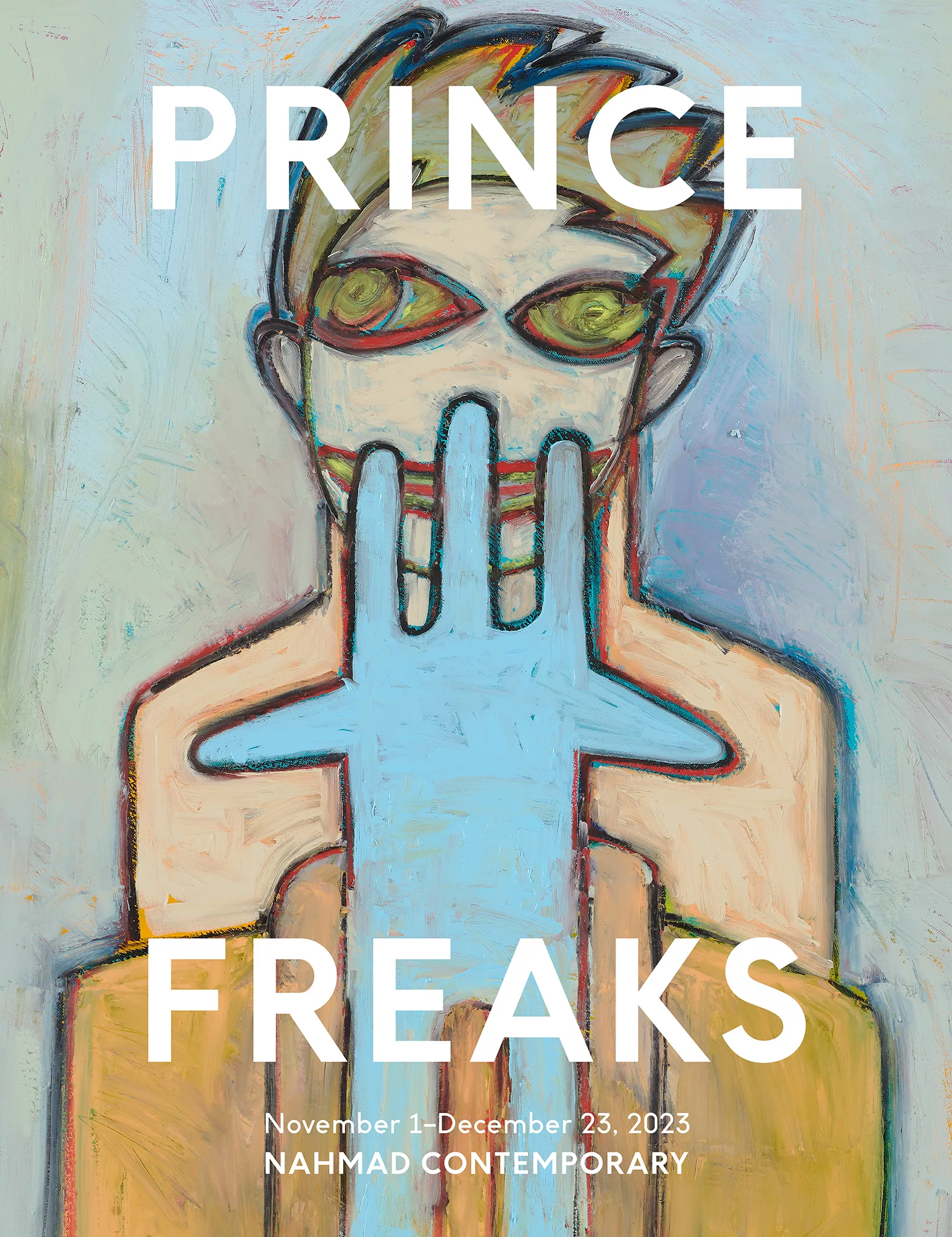
A Critique of Freaks (the latest art) by Richard Prince

freak:

  1. a very unusual and unexpected event or situation
  2. a person, animal, or plant with an unusual physical abnormality. 
  3. a person who is obsessed with or unusually enthusiastic about a specified interest.

 “I woke up as the sun was reddening; and that was the one distinct time in my life, the strangest moment of all, when I didn’t know who I was – I was far away from home, haunted and tired with travel, in a cheap hotel room I’d never seen, hearing the hiss of steam outside, and the creak of the old wood of the hotel, and footsteps upstairs, and all the sad sounds, and I looked at the cracked high ceiling and really didn’t know who I was for about fifteen strange seconds. I wasn’t scared; I was just somebody else, some stranger, and my whole life was a haunted life, the life of a ghost.” 

― Jack Kerouac, On the Road

Until December 23, 2023Nahmad Contemporary

It is no secret that Mr. Prince has what one might describe as a freakish fixation, a true passion for Kerouac’s Beat Generation defining tome, owning multiple rare and signed copies of the book that influenced the likes of Hunter S. Thompson, Jim Morrison, and David Bowie. What magic serum exists in this book that made countless spirited individuals—freaks all, yet some of the most brilliant minds of our time—take to the road or to their dreams of reaching for the impossible after reading it?  As the Culture Critic Meghan O’Rourke succinctly wrote in Slate about On The Road, it is “a book about death and the search for something meaningful to hold on to—the famous search for ‘IT,’ a truth larger than the self.” 

And herein lies the contextual, comparative-analysis starting line to Richard Prince and Jack Kerouac’s On the Road: Freaks is Prince’s search for something deeper, more meaningful, more truthful and more uniquely, and entirely Richard Prince. Freaks, according to the gallery, are the first works created since 1972 where Prince eschews his lifelong modus operandi of appropriation, of mining through the works of others. As a consequence, per the gallery, these are ‘the artist’s most personal works to date.’ A powerful and enticing statement that induces further inquiry. 

The Kerouac/On The Road connection to Freaks wasn’t visually apparent at first but rather unraveled—maybe a meta-homage to the original scroll manuscript of On The Road. The more time spent observing and experiencing the new paintings the more mysterious they appeared, the more alluring they became. Like the pull of the road for Sal Paradise. 

While the paintings are the star, the show consists of about eighty ballpoint pen drawings on paper, variations all, of fantastical, imaginary caricatures much like and even perhaps inspired by (consciously or not) the ‘inked’ indigenous Polynesian Maori Warriors in the throes of battle cry. While fun and interesting they are mechanical, technical like the creation of a woodblock print. And while the repetitive, linear mark-making creates a tribal-folk dynamism, there’s no meat on the bones, so to speak, having little else than what exists topographically. But the sheer number of drawings and the manic attention to detail highlight what many modern-day shrinks would label a behavioral disorder bordering on the obsessive/compulsive. In Kerouac’s day, long before woke culture, this was simply called discipline and having keen attention to detail. 

More interesting, however, is the fact that these drawings were created during COVID, a very ‘distinct time’ indeed, and done so at a rate of one per day over the summer of 2022 when normalcy and freedoms were oppressed, stifled as if forcing our mouths covered would silence them as well. Putting that nightmare behind us, we can now openly smile without a facemask at these whimsical drawings laughing and smiling at us, taunting even, and envision Mr. Prince working feverishly (as Kerouac did while writing On The Road) just to keep from going absolutely effing mad in a world turned upside down. Crazy-ass times make for crazy-ass drawings. 

Turning from the drawings, we return to the coup de gras of the show, the eight paintings that elicited immediate attention from viewers upon walking into Nahmad Contemporary. Each painting depicts a solitary, defiantly stark figure standing in a manner that piqued the senses as might a lone hitch-hiker on the side of a dark road. Oddly, the paintings look nothing like the drawings, no trace of a Maori Warrior, no obsessive filling-in of empty space with oodles of lines. And where the drawings mostly depict unabashed smiles and laughter, pure and exaggerated, the smiles here are half-hidden ‘archaic smiles’ like those found on Archaic Greek statuary from the 6th century BCE and covered in part not so much by a strange hand with strange fingers but rather by a more otherworldly, obtuse, geometric shape mimicking a starfish or castle. At first glance, the figure looks as if it’s picking the nose that doesn’t exist or giving the viewer a large, middle finger. 

6th Century BCE Archaic Greek Sculpture (archaic smile)

Unlike Prince’s earlier, single-figure, film noirish Nurse paintings (mouths also covered—oddly premonitory—with surgical masks) that would have made the perfect companion poster for a Hitchcock horror movie, Freaks is neither pulp nor kitsch.  And on a purely technical, materiality level, they are far superior. The artist’s hand, his touch, his fingerprints—not just his idea—is evident everywhere. Even though the catalog states that oil, acrylic, oil stick and collage (for some) are used in these works, it is the pure color and nature of the oil sticks that seems to dominate the finished, painted works. Unlike when a brush is used, where there’s a stop and go motion in the paintings process because the artist has to keep dipping the brush into globs of paint set out on the palette, the oil stick is ready-made filled with pigment, like a loaded-up tank of gas, which allows for a continuous, non-stop movement and flow, and this flow is what permeates the picture’s vibrational tones. The flow here is like a jazz beat and it’s authoritative, improvisational, skating and skimming spontaneously over the entire surface, delineating the forms and shapes of the figures, and the wet-into-wet blending of color, and the color over color (the chroma is rich and lush) with background treated gesturally and only alluding to more shapes with more color which in turn amplifies the mystery while helping to convey and elevate the most startling aspect of these new works: their overwhelming sense of sadness. This was unexpected.  Images of the series online (which always deceive) gave the work a silly, cartoonish appeal. The yellow pigment recalls Bart Simpson’s pigmentation and the exaggerated body parts furnish its comic look.  Yet there is a discomfiting relationship between weight and the air about these single-figures, an essence truly haunting, ghostly, perplexing; Perhaps at the base of the complex of sensations exists a melancholia of the sort found throughout On The Road, which begs the question: Richard, is this you? 

Freaks, we are told, began with a series of heads the artist created with ballpoint pen back in 1972 and were—according to the artist—“the first things I did that ever had any soul.”  Why, then, did Prince abandon them for so long? The Press Release from Gagosian Gallery’s 2018 High Times show stated: “when Richard reached NYC he wasn’t interested in anything to do with feelings, especially his own. He wanted nothing to do with himself. He wanted to change places with someone else, even just for a day. Just to see what it would be like to be someone else.”  

Kerouac’s words in the epigraph now start to rhyme: “.…and really didn’t know who I was for about fifteen strange seconds. I wasn’t scared; I was just somebody else, some stranger, and my whole life was a haunted life, the life of a ghost.”       

Prince was ghosting himself.  He tapped into something early in his career only to avoid it for fifty years. The artist elaborated that he wasn’t ready back then to make art “with my own blood.”  Apropos, for fifty years, Prince has lived a vampiric life, preying on (mining) the work of others to continue flourishing. Even ballsier still, creating art, he says, that he could “get away with.”  Such an existence, no matter how successful, must be exhausting for one’s soul if not entirely deadening to it. Plus the constant lawsuits, the negative press, the constant battling-it-out in the public arena with all the haters on social media must take a toll. The draconian lockdowns were well suited for self reflection and introspection, an opportune time to question one’s raison d’être; whereby during a time of social quarantine, the self is all you have. Prince, obviously, took the time to dig up those first recorded remnants of his ‘soul’ in order to breathe a different and perhaps more fulfilling spirit into his new work. 

Historically, it was a black and white photo of the Abstract Expressionist painter, Franz Kline, in his 14th street studio peering out the window that Prince saw as a young man which propelled the artist to move to New York some fifty years ago. The artist described the photo as “a man content to be alone, pursuing the outside world from the sanctum of his studio.” But with these paintings, Prince was no longer pursuing the outside world. He was, most certainly, and finally, looking inward, pursuing his own world. But what was he feeling? 

An emotional and jarring disconnect exists in all the works—all of which are labeled Untitled—between the half-hidden smile and the eyes. These are not smiling eyes, these are sad and wild eyes, these are zombie, apocalyptic eyes, these are eyes that have been on the road for too long, have seen too much, have partied all night, have lost sleep; these are far away eyes and are the eyes to the characters in On The Road who never found what it was their sad lives were looking for—if they ever even knew what it was they wanted when they went searching via the road. The absence of a nose in all of the paintings accentuates the disconnect between how the eyes read and the enigma of a smile masked by confusion.   

According to the gallery, the painted works are ‘kindred with Picasso’s harlequins.’ This is true on one level: harlequin comes from the 16th century French word for demon, hellequin (note the first four letters of that word) whose role in the French courts of the time was ‘to trick and deceive people, to keep them off-balance, guessing and confused.’ Body language is less difficult to comprehend. Covering the mouth with a hand can indicate an effort to hide dishonesty or deceit. While clasped hands as seen in many of the works is often a sign of being self-conscious and is an expression of nervousness, apprehension. It is also a sign of being defensive as Mr. Prince has had to be throughout his entire life (at least vis-a-vis his lawyers and gallery). Or, just as a harlequin would, the artist is mocking his detractors. 

But on another level, pictorially, the figurative paintings fall more in line with the ‘anatomical votives’ of classical antiquity—statuary votives made for, and as offerings to, the divine. Compositionally, the figures by Prince, more figurine than anatomically correct body, are stoic in form with a rigidity more stone-like than fleshy and constructed as if with building blocks or Legos, legs and arms compartmentalized into solid, rectangular slabs of paint all neatly ensconced between what appears to be two pillars, two monoliths of varying color. And we are reminded yet again of what Kerouac said of the Beat culture: “it implies the feeling of having been used, of being raw. It involves a sort of nakedness of mind, and ultimately, of soul: a feeling of being reduced to the bedrock of consciousness. In short, it means being undramatically pushed up against the wall of oneself.” 

Every single one of us who survived and lived through COVID were metaphorically pushed up against the wall of oneself. We were at our wits end with the rules, the dictates, the deaths, the illnesses, the mandates, the shutdowns, the requirements, the school closures. Of course Prince would paint wild, dark, bewildering and crazy eyes. And are not these figures being pushed between two walls? Are they not reduced to their simplest forms and undramatic (as opposed to the dramatic representations of the artist’s Nurse paintings)? Are these not raw and naked representations of the artist’s true self, of his soul? Prince has said, “freaks are something between a monster and a friend.” On that, we are all freaks struggling between the good and evil within, constantly walking a line of sanity and lunacy, between nothingness and paradise, in a world appearing more insane by the day, inhumane; where both kindness and wickedness hide behind the same face, behind the same thin veil of honesty. These latest paintings by Richard Prince act as stimuli for thinking outside the box, for dreaming big, for creating art with no rules or boundaries. Art elevates the mind and varnishes the soul with a magic serum, like the one laced between the pages of On The Road, and has—for millions of people around the world—proffered the countless reasons for living, for being, for seeking, for digging deep, for experiencing, for running against the wind. We are all journeying freaks on the road to ‘IT’. Prince, it seems, got there sooner than most. —Gregory de la Haba

Buy on Amazon

I am a heading

Here goes your text ... Select any part of your text to access the formatting toolbar.

Here goes your text ... Select any part of your text to access the formatting toolbar.

“Artists have a responsibility to their work to raise it above the vernacular.

Rene Ricard, The Radiant Child, Artforum, 1981

To raise one’s art above the vernacular is to make monumental what no one could before, to take that which is tangible and forge the unreal; to eschew what’s popular in pursuit of the extraordinary. No group of west coast artists––from this writer’s perspective––manifest the words of the late, great art critic, Rene Ricard, better than the California Locos, artists who helped inaugurate the California-as-brand lifestyle as spectacularly as the Beach Boys or The Mamas and the Papas with their 1965 hit California Dreamin’. Back when Abstract-Expressionism, Assemblage, Finish Fetish and Light & Space inseminated the Rock, Surf, Punk and Skate culture of Los Angeles in the 1960’s and 70’s, a new, bastard-like breed of artist emerged and a nascent groundswell of pure native-Angeleno voice started clamoring throughout the entire SoCal urban-sprawl region––around places like Avenue 43 in Highland Park (a no man’s land of turf wars and violence, and home to the Avenues Gang) or along the Arroyo Seco, the “dry stream” that runs up and through this Northeast LA hood. Highly individualistic and unconventional, these artists were born with such a countercultural mindset and fervor, with such dynamism and a style completely their own, that the artist––like the art itself––deviated from the easel to the skatepark, from the gallery to the “Locals Only” break at Huntington Beach, from safe studio with brushes to enemy territory with spray cans, from stretching canvases to shaping surfboards; these artists created an art form that characterized and interpreted their SoCal lifestyle like no one before them. Theirs was a subculture born on the periphery of legitimacy, in gangs, punk bands, and surf line-ups, and they rolled fiercely independent, rebellious, and fearless, sporting names like Tourjé, Van Hamersveld, Wong, Bojórquez, and Wisdom, and who were without question equals to their east coast rivals–– think of the likes of Rene Ricard’s “Radiant” children Basquiat, Haring, and Rifka. These are artists who upon further DNA testing (and a few record-breaking auctions) will prove beyond a doubt that they are De Kooning’s, Ruscha’s, Baldessari’s, and Hockney’s legitimate heirs.   –Gregory de la Haba 

CALIFORNIA LOCOS

Chaz Bojórquez, known as the “godfather of graffiti art,” is considered one of the first artists who successfully made the transition from street to gallery, and is credited with bringing the West Coast style of graffiti into prominence, evolving it from a Northeast L.A. gang-oriented form, into an extremely fluid calligraphic style of international importance. His iconic street image, a stylized skull called “Senor Suerte” (Mr. Luck), has become a seminal icon in graffiti art, becoming known as the first stencil tag a full 20 years before Banksy made the stencil his iconic form. Bojórquez’s paintings are in the permanent collections of the Smithsonian, Laguna Museum of Art, M.O.C.A., L.A.C.M.A., and many more. Bojórquez, a Chouinard alum, was prominently featured in the renowned Art in the Streets exhibit at MOCA in 2011, as well as numerous international exhibitions and is known as a primary influence on many contemporary graffiti artists such as Retna, Banksy, and Shepard Fairey. 

Dave Tourjé was born and raised in the culturally eclectic Northeast L.A. of the 1970s and his upbringing amongst the skaters, gangs, and the area’s tribal friction plays heavily in his work—his presence as an original vertical skater showing through in the attitude and energy of his iconography. Also a musician, Tourjé was involved in the important L.A. Punk and Post Punk scene of the late ‘70s and early ‘80s. As a member of the influential band the Dissidents, he played shows with Camper Van Beethoven, Saccharine Trust, and The Minutemen as well as many others. Tourjé’s complex, mainly large-scale reverse-paintings on acrylic glass, oscillate between high and low, punk and institutional hegemony, and combine elements through many disciplines, having also attended Art Center and UCSB’s College of Creative Studies during the late ‘70s. He was the subject of a one-man exhibition covering 15 years of his paintings at the Riverside Art Museum in 2002. His work has been featured at the Oceanside Museum of Art, the Orange County Museum of Art, and Laguna Art Museum, as well as numerous galleries since 1985.  

John Van Hamersveld is an American graphic artist and illustrator. He created “The Endless Summer” poster in 1966, and designed record jackets for pop and psychedelic bands since the 1960s. Albums include Hotter Than Hell by Kiss, Magical Mystery Tour by The Beatles, Crown of Creation by Jefferson Airplane, and Exile on Main Street by The Rolling Stones. He created the 1984 LA Olympics poster and 360 foot mural, the identity for Jimmy’Z surf brand, and the brand identity of Fatburger. Van Hamersveld’s work is in the collections of the LACMA, MoMA, Cooper Hewitt, and Smithsonian museums. His psychedelic renderings, whether for posters or albums, are widely regarded as some of the best of the form. Yet, what the public may be surprised to discover is just how dynamic the rest of his work is; his output as a draftsman, designer, and photographer continues to be impressive and compelling.

Norton Wisdom has been collaborating with musical ensembles for live art painting performances since 1979. His collaborations with renowned artists include The Red Hot Chili Peppers, Nels Cline (Wilco), Bernard Fowler (Rolling Stones), Ivan Neville, Stephen Perkins (Jane’s Addiction), Llyn Foulkes, National Bamboo Orchestra of Bali, the Disney Hall with Christoph Bull, and the Winter Olympics in Salt Lake City. His live painting performances have touched off a growing international movement of the same type, which he has been forwarding since the ‘70s, and he is known as a prime mover in this growing genre. His formal studio painting practice includes a meditative dialogue with trapezoidal shapes and gestural elements, which he returns to as a formal and continuous response in his evolution as a renowned third-generation abstract painter. His early influences at Chouinard included John Altoon and Emerson Woelffer.

Gary Wong studied under Emerson Woelffer and Matsumi Kanemitsu at Chouinard and was a vital part of the shifting dialogue integral to the formation of West Coast postmodernism as well as surf/skate/rock culture as we know it today, being part of the legendary underground collective the Jook Savages with Rick Griffin, and maintaining as well as tight associations with the likes of Boyd Elder (Eagles), Ivan Hosoi (Hosoi Skates), and Jim Ganzer (Jimmy Z).  His visual language is a sophisticated collage-based paint/draw process that often uses photography, and reflects his involvement in music as well as wider social and political concerns. His process combines his formal approach as well as a folk-like primal style. Known in the L.A. Blues scene as “Charlie Chan,”, he is a legendary presence as a well-known bandleader, gigging regularly throughout L.A. Close friends and associates have included artists as diverse as Al Ruppersberg, Doug Wheeler, and Terry Allen.

Buy on Amazon

I am a heading

Here goes your text ... Select any part of your text to access the formatting toolbar.

Here goes your text ... Select any part of your text to access the formatting toolbar.

Originally published in 2016

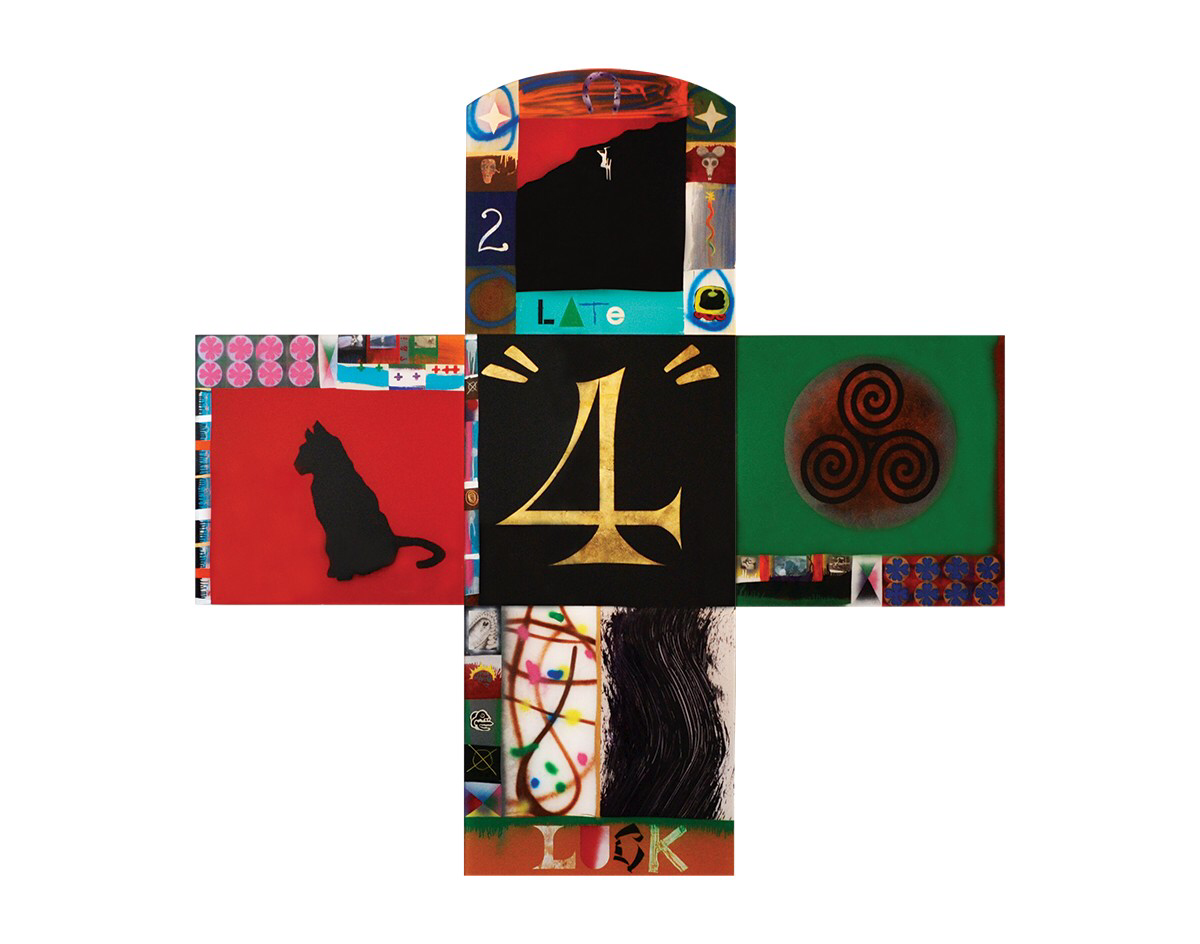
(Dave Tourjé, 2 Late 4 Luck, 2014, mixed media)

“They cared about me because I did things other men were afraid to do.”

–Evel Knievel

Walking about CONTEXT in Wynwood, Miami, during this year’s Art Basel extravaganza, I spotted a Dave Tourjé masterpiece at Mat Gleason’s Coagula Curatorial booth. The painting, 2 Late 4 Luck, bespeaks of that moment in-between moments that often finds one when caught between a rock and a hard place. Or, in the case of Evel Knievel, mid-air over the Grand Canyon on a motorcycle.  The painting’s cryptographic words, markings, numerals, and visuals read like a primordial incantation, a sacred offering emanating from a stone tablet.  The smooth surface and gleaming pictographs along with the painting’s over-life-size, totemic-cross shape produce an air of heraldic bearing which lends importance, monumentality, and historicity to the work. Symbolism emblazoned on Tourjé’s would-be escutcheon: A horseshoe (that magical and superstitious charm the world over), the number ‘4’ (symbolic for ‘good luck’ in Chinese culture), and a black cat (a symbol of evil omens in Western cultures). Complicating the message, other imagery consists of a skier jumping (or falling?) off an 80′ drop, a surfer catching a big wave, two skaters (one a portrait of the artist, the other his friend and pioneer in extreme sports, Elliot Mills) grinding along the edge of an empty pool in a SoCal hood, and, of course, Evel Knievel, the mad daredevil on his bike. 2 Late 4 Luck is a celebration of people, the Ying and Yang in life, and the lucky/unlucky mystical turns of fate surrounding life’s ultimate pursuit: survival. 2 Late 4 Luck is an homage to humanity, to man (the individual human), to the maverick, the risk-taker, the adventurer, to those not shy of grabbing the proverbial bull by the horns. But it is also this: a pictorial evocation to the duende spirits.  

From deep within ancient Iberian lands, El Duende, the fairy or hobbit-like creature in Spanish folklore from where the word duende derives, chooses you.; you don’t choose it. To have duende is to have soul, to exude life in the face of death, to be authentic, and to stand tall with courage in order to back down from absolutely nothing. Bravery is paramount. Unlike a muse that could physically exist in the flesh and be hand-picked by an artist (think Picasso taking Dora Maar), El Duende (as selective as Picasso) is more elusive spirit than tangible asset.  El Duende is that which pulls your hairs on the back of your neck up when standing on a steep ledge and whispers in your ear: I dare you.  El Duende, for those aiming at absolute artistry, assists at cutting through the bullshit in life, at guiding the chosen to the very edge of everything, to a never-boring place, to that in-between and unnamable spot where time stands still—between nothingness and paradise yet always titillatingly on the cusp of danger as in the bullring or inside the barrel of a wave. El Duende takes the creative beyond sanity but not yet entirely to the cuckoo’s nest; it restores the mojo and fills the sails enabling the writer, the poet, the painter to work all night and every night in practice and pursuit of artistic truth. El Duende is the mediator of death and never bespells its magic upon the faint of heart or to those without a serious set of cojones. It is why legions of fans the world over loved Evel Knievel, a duende spirit incarnate, because he did those things most of us are afraid to do (and because he took us along for the thrills). But El Duende loves, too, the spectator/passenger with equal measure if but with different mien as the artist/performer, and will—when standing before awe-inspiring feats of artistry—seize the captivated by the jugular! Whip them round and round!  Flummox their thoughts and insides in response to the art in order to remind them of their own mortality. And murmur effectively in their ear: “Grow some fucking balls, son. Make life a joyride.”
Evel Knievel once said: “Anybody can jump a motorcycle. The trouble begins when you try to land it.”  2 Late 4 Luck, a visual feast proffered by the duende spirit, captures that sentiment brilliantly. —Gregory de la Haba

Buy on Amazon

I am a heading

Here goes your text ... Select any part of your text to access the formatting toolbar.

Here goes your text ... Select any part of your text to access the formatting toolbar.

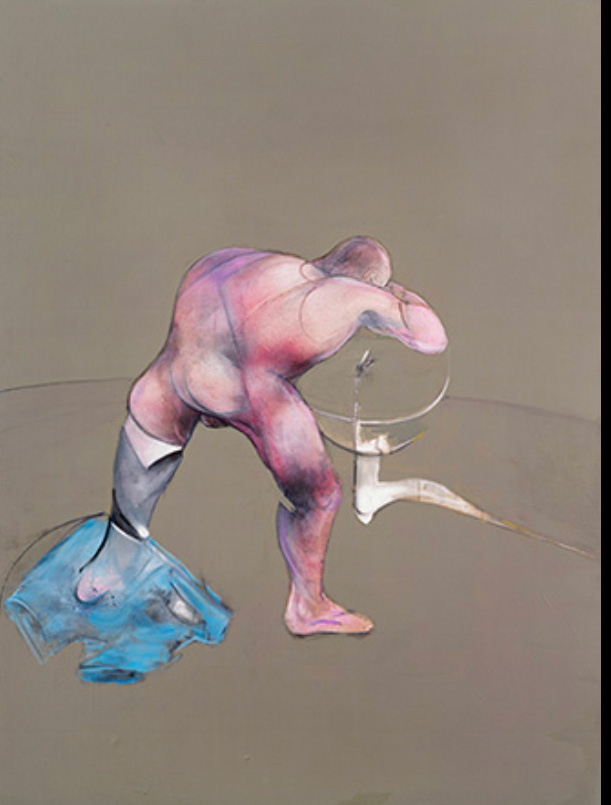
Francis Bacon’s Man at a Washbasin at Marlborough Gallery showcases the master painter’s prowess and command at his rock-solid absolute best. 

Anne Rothenstein at Stephen Friedman Gallery proves how emotionally impactful the simplicity of line, contour, and shape can be. 

In 100 years, when all the stylized painters of today will be viewed and hung in the same vain as a Watteau or Fragonard, Reginald O’Neil (Spinello Gallery) will be cherished like a Vermeer.  

Who the fuck knew that beneath the strawberry frosted layer cakes and behind the colorful lollipops Wayne Thiebaud was creating other works like the spectacular portrait, Man With A Cigar, at Nahmad Contemporary. 

And Pace Gallery is exhibiting one of Julian Schnabel’s latest paintings on velvet. Read an in-depth review of them here: 

Sent from my iPhone

Buy on Amazon

I am a heading

Here goes your text ... Select any part of your text to access the formatting toolbar.

Here goes your text ... Select any part of your text to access the formatting toolbar.

An Analysis of the Artist’s Latest Work: PREDOMINATELY NATURAL FORMS, MEXICO, 2022

As the show’s title suggests, nature’s innate forms are the starting point for Julian Schnabel.  Not spoken as such but made visually obvious in the work is that Julian so too abides by Picasso’s axiom, “I paint objects as I think them, not as I see them.” And that unstated tenet, on a fundamental level, for Julian, is observing the world in a quantum mechanical way—pictorial descriptions of nature on the subatomic scale. In other words, painting—with the naked eye—the invisible. 

Natural Forms Near the Fountain of Youth
Natural Forms Near the Fountain of Youth, 2022
Oil, spray paint, molding paste on velvet 112 x 96 1/4 inches (284.5 x 244.5 cm

Quantum Science examines how everything in the universe is connected with everything else and does so mostly through investigations of higher, albeit smaller, subatomic particle dimensions (or multi-dimensions) that exist (purportedly) beyond our sensory faculties. Quantum physicists attempt to prove true the sort of far-out thinking that if you will it, it will be. The materialization of positive thinking, squared. Scientists have already proved that photons can change from particle into wave and back again. Pardon the parlance, but as they say on the street: crazy-ass, mind-bending shit for sure. Crazier still, if not entirely baffling, is that photons, and now we know other atomic particles as well, can be in two places at the same time, a phenomenon called Quantum Superposition. Simply put, each particle in the universe is also a wave, and waves, by their very nature, occupy multiple places in space at once. Surfers, like Julian Schnabel, intuit this. They know full well waves surfed today were formed elsewhere days ago. The wave itself, however, is riding (existing between) past and present concurrently. Art, in much the same way, has always been a portal between past and present time, a multi-dimensional window filled with transferential effects like powers which take us out of being trapped by our own bodies and into unexpected and at times unimaginable idea-worlds. With his latest collection, metaphysical constructs all, Julian Schnabel proffers sensuous access into the magic of quantum superposition while simultaneously magnifying the mysteries of nature’s natural forms in bold, exquisite, and fluid renderings.  

Recently unveiled at Vito Schnabel Gallery, Tribeca, New York City, the four large-scale paintings, (1) Natural Forms on the Other Side of the Sierra Madres, (2) Natural Forms Near the Fountain of Youth, (3) Natural Forms Dancing at the Beach, (4) Natural Forms Before the Sun Comes up in Samba’s Boat, are not instantly recognizable representations of a specific place from a site-specific vantage point south of the American border. They are the physical manifestations brought about from Julian’s past and current experiences of place and of memory’s lingering sensations—and desire—of place. These four works act as conveyance—from his mind to yours—into pulsating fields of originative energy forging ancient vibrations along with hypnotic resonance; paintings rendered not analytically, or logically but conveyed non-linearly, multi-dimensionally, in some sense quantumly, creative invention which provokes a shift greater than the putative paradigm type–a shift of physics, maybe, where limitations, rules, and edicts deliquesce leaving the once-marooned mind new land, the freedom to reconstellate, to roam.  Imagine a contrast at least as stark as America to Mexico, where boundless possibilities await….we’re talking orders of magnitude more profound.

Natural Forms Near The Fountain of Youth is imbued with meaning, myth, and coincidence. The painting’s instant appeal and prominence derive from the rich background and powerful purple velvet. The Phoenicians were the first to manufacture purple and did so by harvesting murex snails for their mucus. The ancient Greek historian, Herodotus, dubbed the Phoenicians the Purple People because the dye so stained the skin of those who made it. Interestingly enough, it was also Herodotus in the 5th century BC who first made mention of a ‘mystical spring’ to which Schnabel’s painting alludes. 

Extremely expensive to produce, purple was always associated with royalty. From Mesopotamian Kings to modern-day British Queens, purple was revered, even outlawed to wear if not of royal blood. Its symbolism runs deep in most major religions.  In the Catholic Church, it is associated with Christ’s death on the cross; purple carries the power of redemption through God in Judaism. The Hindus equate purple as a sign of peace, and in Buddhism, a subject Julian has often hinted at through his depictions of the Buddha, purple and mysticism go hand-in-hand. On that note, there can be no doubt that Julian Schnabel believes in the spiritual apprehension of truths existing beyond the intellect. Beyond ocular proof. As the other paintings also suggest, Natural Forms Near The Fountain of Youth is, in its physical presence, numinous. The juxtapositioning (the superpositioning) of placement and temporality using key pictorial elements invents a type of visual mantra, and, as such, becomes a balm for the eyes.  

Coinciding and by virtue of their verticality, the two white amoebic forms appear to be falling downwards. While there are other elements to the picture’s magnetic pull, from the soft golden line rippling outward from the center (as if caused by a wish-penny) and echoing its way round the sharp-edge of the reaping-hook shape slicing zig-zagged across the pile, it is these white amoebic forms that keep the viewer’s gaze captive and hold the painting’s composition together like a bearing column, only these might be made of tapioca. The paint/modeling paste is embedded thickly, firmly, mightily, into the stratum of velvet enfolded horizontally across the stretcher bars; two separate sheets of velvet were incorporated to make one larger piece for Julian to paint on and this layering atop one another creates a seam smack in the middle of the painting. Yet this is no horizon line belonging to nature but simply a trace reminder of the limits of width regarding certain machine-made products vis-à-vis the stark contrast to this man’s think-large proclivities. Paradoxically, the seductive purple belies the painting’s true power of drawing (literally) and painting (materially) opposing elements (hard vs. soft edges, warm vs. cool color notes, light vs. dark, etc., etc.,) as working in unison.

In some Eastern Christian churches, it is forbidden to celebrate the Divine Liturgy without a most sacred altar prop: the antimins. A rectangular cloth of simple linen (symbolic of the cloth that wrapped around Christ’s dead body) folded in three and then into three again so that when unfolded and laid flat, a cross—and hence a reminder of Christ—is ever-present within the creases during mass. Only when the antimins is present can the mass be performed. A two-thousand-year-old tradition that brings spiritual gravitas and purpose to the simplest of actions.  For Julian, the practice of painting is tantamount to a Bishop performing the holy sacrament of the Eucharist. Because of that, each work becomes something larger than the work itself. The late poet, writer, and artist Rene Ricard pointed out early on that Mr. Schnabel deploys an “extrapictorial consideration” in his work insofar as he is not just making a painting but is “manufacturing objects.”  Rene didn’t expound as to why Julian does this, but for painters who employ a breath and scope similar to Julian, who stand on the shoulders of giants (as the late artist Lance De Los Reyes enjoyed saying), the reason is simple: painting is king. And as such, exalted. It is a holy act that infuses, by way of devotion, a spiritual, nonmaterial underpinning to art, particularly to Julian’s. These velvet paintings assuredly carry that extrapictoral air and in so doing evoke the sanctity of the sacred altar cloth turned out for Resurrection Sunday.  

Of and from the past, Julian has a penchant for substantive material (and materiality). When the Venetian painter Tiziano Vecelli, aka Titian, painted the posthumous portrait of the 77th Doge of Venice, Andrea Gritti, in the year 1540, Venetian velvet was the most luxurious and expensive fabric in the world and, perhaps not coincidently, at the height of its fashionable fame. Like the color purple, this cloth was tailor-made for royalty, perfect for showing-off. For ecclesiastical vestments, velvet was the Papacy’s fabric of choice as seen in Raphael’s portrait of Pope Leo X (1518-1520) wearing his winter, Venetian velvet mozetta (elbow-length cape). In Titian’s iconic painting, the infamous Doge is wearing soprarizzo velvet, a type that has two distinct layers; the bottom layer consists of a lighter curl of velvet that reflects light whereas the top layer absorbs light. This rich play of light and surface texture made it the perfect material for painters like Tiziano and Raphael to highlight their deft skill at capturing—in varying colors of oiled pigments—velvet’s seductiveness and sheen. It’s little wonder Julian’s appetite for painting would have him reaching for the richness of velvet as material for the exploration of nature’s intrinsic wonder and magnificent abyss. 

Julian Schnabel, Natural Forms on the Other Side of the Sierra Madres, 2022. 
Oil, spray paint, molding paste on velvet, 113 3/4 x 93 1/4 inches.
“I paint objects as I think them, not as I see them.” Picasso

In Natural Forms on the Other Side of the Sierra Madres it is the “other side” that carries one’s imagination from the painting’s intrigue to somewhere not yet visited.  The Sierra Madres mountain region is drawn in a simple outline format in an earth-tone red atop sand-beige velvet. The mountains themselves are framed by two, albeit thinner versions of the white amoebic forms in Fountain yet this time they’re being jettisoned like a shrieking interjection by a larger pseudopod shape of blood red and sky blue. Cormac McCarthy’s opus magnus Blood Meridian or the Evening Redness in the West comes to mind. This painting, however, is far less brutal than McCarthy’s fiction. In fact, there’s a bright and recurring theme in this work as well as in the other three, and it takes root compositionally speaking in the visual interplay of pairs. Whether it’s the two amoebic forms in Fountain or the two palm tree shapes in Natural Forms Dancing at the Beach, or the two linear cacti-esque shapes in Natural Forms Before the Sun Comes Up In Samba’s Boat, coupledom pervades. Historically, two has always been associated with being non-confrontational and is the peacemaker amongst numbers. Two is diplomatic and forgiving. It is ‘the all-knowing’ number and often the most underestimated. And just as every coin has two sides, Julian is alerting us to seek what’s on the other side to that which is staring us straight in the face. He is painting the grass on the other side of the proverbial fence and calling it a mountain. Perhaps Julian’s double ideograms are a nod to his mentor and early teacher, the late Ron Gorchev, and his pairing of biomorphic forms.

The press release for the show stated that “Schnabel permeates each composition with a compelling dissonance between the dense silk pile of smooth velvet and the layered, impasto surfaces bearing his pigments.”   Perhaps. It does make an important point, yet out of that dissonance and apparent from the vantage point of the middle of Vito’s gallery, it would be difficult not to feel a compelling sense of harmony. That’s why they triumph. The dissonance, particularly the lack of agreement with Julian’s oeuvre, is more accurately expressed as originating in the space beyond the work, between those who viewed it and those who mistook it for something else, a disagreement regarding particles or waves. But superpositioned, the four masterworks sing highly tuned songs. They achieve a type of synchrony. While evoking natural forms, they are guttural interpretations of nature’s forever-locked mysteries, though they’ve brought to light some of those born of the Mexican Plateau. They are of the volcanic dust that has yet to settle, the ephemeral flora and fauna not yet forgotten and the wind-strewn evanescence of all things still tumbling. —Gregory de la Haba

Natural Forms Before the Sun Comes up in Samba’s Boat
Natural Forms Before the Sun Comes up in Samba’s Boat, 2022.
Oil, spray paint, molding paste on velvet, 112 1/4 x 104 1/4 inches. © Julian Schnabel; Courtesy the artist and Vito Schnabel Gallery
Natural Forms Dancing at the Beach
Natural Forms Dancing at the Beach, 2022.
Oil, spray paint, molding paste on velvet, 111 3/4 x 90 3/4 inches. © Julian Schnabel; Courtesy the artist and Vito Schnabel Gallery.
All images © Julian Schnabel; Photo by Tom Powel Imaging
Buy on Amazon

I am a heading

Here goes your text ... Select any part of your text to access the formatting toolbar.

Here goes your text ... Select any part of your text to access the formatting toolbar.

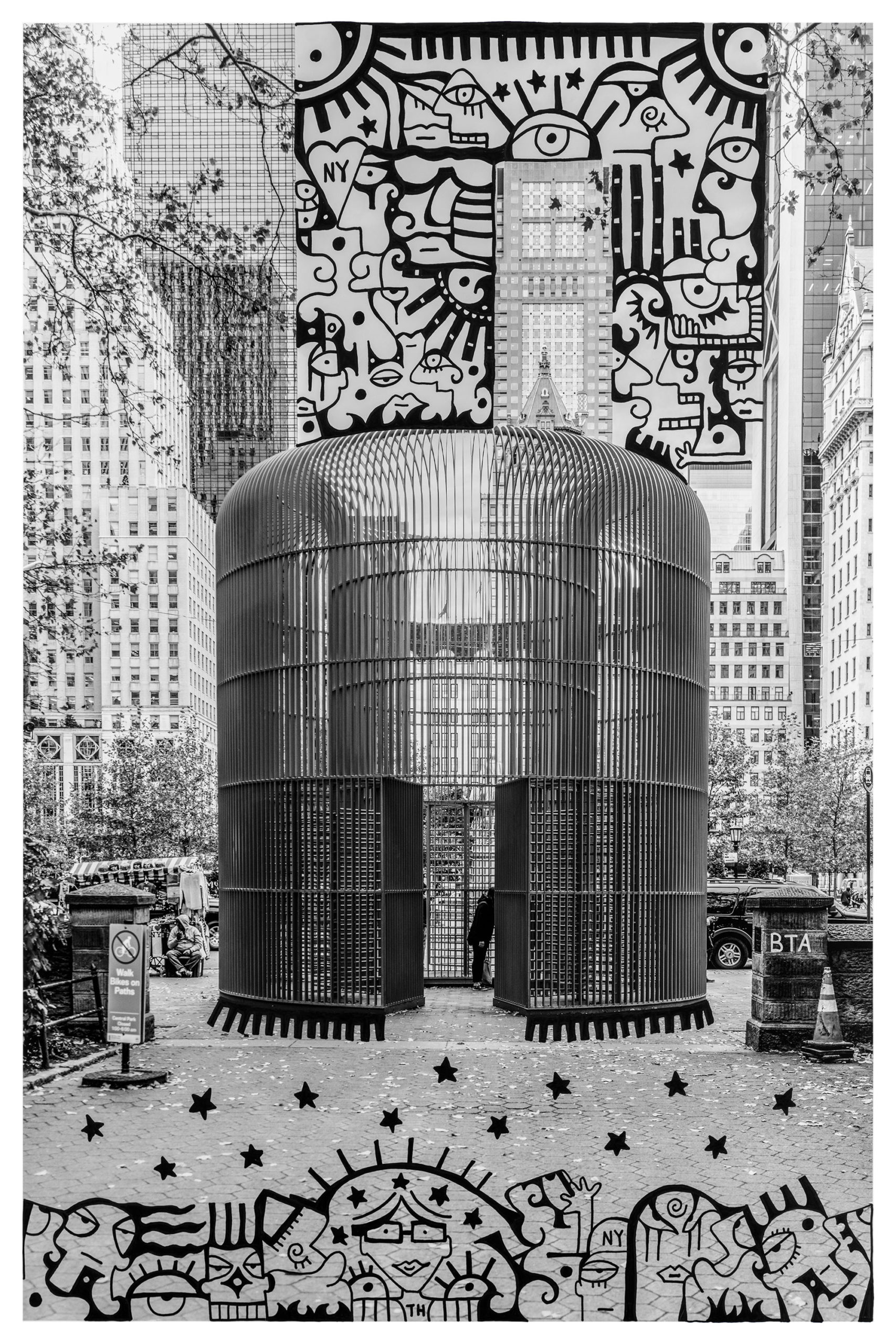
The amplitude and potency of art are in its power to inspire and—as the Public Art Fund in NYC does each season staging ambitious, free art exhibitions throughout the city’s urban sprawl—to surprise and delight, as well.  Good Fences Make Good Neighbors was the latest PAF project that did just that. Featuring world-renowned Chinese artist, Ai Weiwei, with curation by PAF Director & Chief Curator, Nicholas Baume, along with Associate Curator, Daniel S. Palmer, the title of this five-borough-wide exhibition is a line taken from Robert Frost’s early and very iconic 20th-century poem, Mending Wall, that tells the story of a New England farmer (the narrator) who, with Spring’s arrival, asks his neighbor to help in fixing their shared divide, a wall —the sort made of fieldstones placed one atop the other without any use of mortar—separating their properties and which, we learn, had fallen into disrepair from Winter’s wrath and or a hunter’s trespass.  As the two neighbors begin the mending process, each heaving and emplacing the displaced stones from both sides of their properties,  the farmer-narrator sets forth to question the very purpose of the actual wall standing between them. Sound familiar? The neighbor’s only reply: “Good fences make good neighbors.” 

Homage to Ai Weiwei — Washington Square

In this American classic, Frost explores not only the boundaries, demarcations, and offenses walls create but also the beautiful fellowship found in man when working together on a common interest or goal. The poem is an astute study in dealing with life’s contradictions, tensions, and prejudices found in society —in one another. As one all too familiar with such themes —and of walls particularly,  especially after getting sent behind four of them in China for political offenses—Ai Weiwei brings an added bonus of authenticity, legitimacy, and profundity to this Public Art Fund project. Inspired by the “international migration crisis and current global geopolitical landscape”, Good Fences is Ai’s reaction to “a retreat from the essential attitude of openness” in American politics and a passionate plea “to do more” with concern human suffering, displacement, and divisiveness. Ai Weiwei is, according to this writer, possessed with an art-spirit-magic akin to Gabriel García Márquez and is not simply hacking a line from Robert Frost for mere creative effect but, in fact, becomes Frost’s protagonist by questioning issues pertinent to a civil society confronted with, says Ai, a “rise in nationalism, an increase in the closure of borders, and an exclusionary attitude towards migrants and refugees, the victims of war and the casualties of globalization.”  Wei Wei is now the farmer-narrator or, we might say for 2018 context, the migrant-narrator seeking good neighbors to help mend societal ails, collaborative ways to help restore civic virtue and civil discourse, and to eradicate divisive boundaries existing between peoples and countries.

Billy The Artist has resided in the East Village for over 30 years, is a master of line, internationally recognized, and counts himself a big fan of Ai Weiwei. He and his BTA Studio photographer, Bryan Thatcher, began discussing Good Fences the moment installations began popping up all over their neighborhood. After documenting the work in black and white photos and investigating Frost’s poem, it dawned on Billy he could play the role of the farmer-narrator’s neighbor and answer affirmatively Wei Wei’s call “to do more”, to help in the mending process thusly: “After 9-11, there was a tremendous outpouring of love and togetherness, of unity, and Ai Weiwei’s project reminded me immediately of the Tiles For America fence at Mulry Square, in the West Village. Thousands of people around the world contributed by adding their personal touch, a tile to the chain-link fence showing support and solidarity. The 7th Avenue fence was very much like the stone wall in Frost’s poem: both, through unity, helped in fixing something broken.” Billy continued: “I somehow wanted to bring my own art to Weiwei’s fence. A creative layering or piling not of stone but of light atop the dark underbelly behind Weiwei’s political commentary. One more voice to further propel Weiwei’s cause.”  

Asked his favorite line in Frost’s poem, BTA, as those in the art world call him, replied: 

“He moves in darkness as it seems to me”

“We must always seek the light and find the truth no matter the cost. We need thought-provoking dialogue and challenging art that takes us out of our comfort zones and into the realm of others’ thinking and feeling. Not because our way is wrong, insensitive, or lacking empathy, but because we’re all humans trying to find our way in this world. And as Americans, we have such an unbelievable amount of freedom and protection to do and say pretty much anything we can dream of. We weren’t raised and given this freedom to take lightly or to get offended so easily. We can handle another mouth to feed just as we can dress half a million refugees if we had to from all the extra clothing most of us have stored away in our closets. Great art takes us out of the darkness and Good Fences Makes Good Neighbors shined a brilliant light on what humanity needs to do to remain human. And that, my friend, is worth talking about.”

We at Fjord’s Review feel these new works by Billy The Artist, inspired entirely from Ai Weiwei’s Good Fences, are some of his best work to date. We’re certain you’ll agree. 

Billy collaborated with the photography of Ai Weiwei’s fences with Bryan Thatcher.

–Gregory de la Haba

Buy on Amazon

I am a heading

Here goes your text ... Select any part of your text to access the formatting toolbar.

Here goes your text ... Select any part of your text to access the formatting toolbar.

From the book:

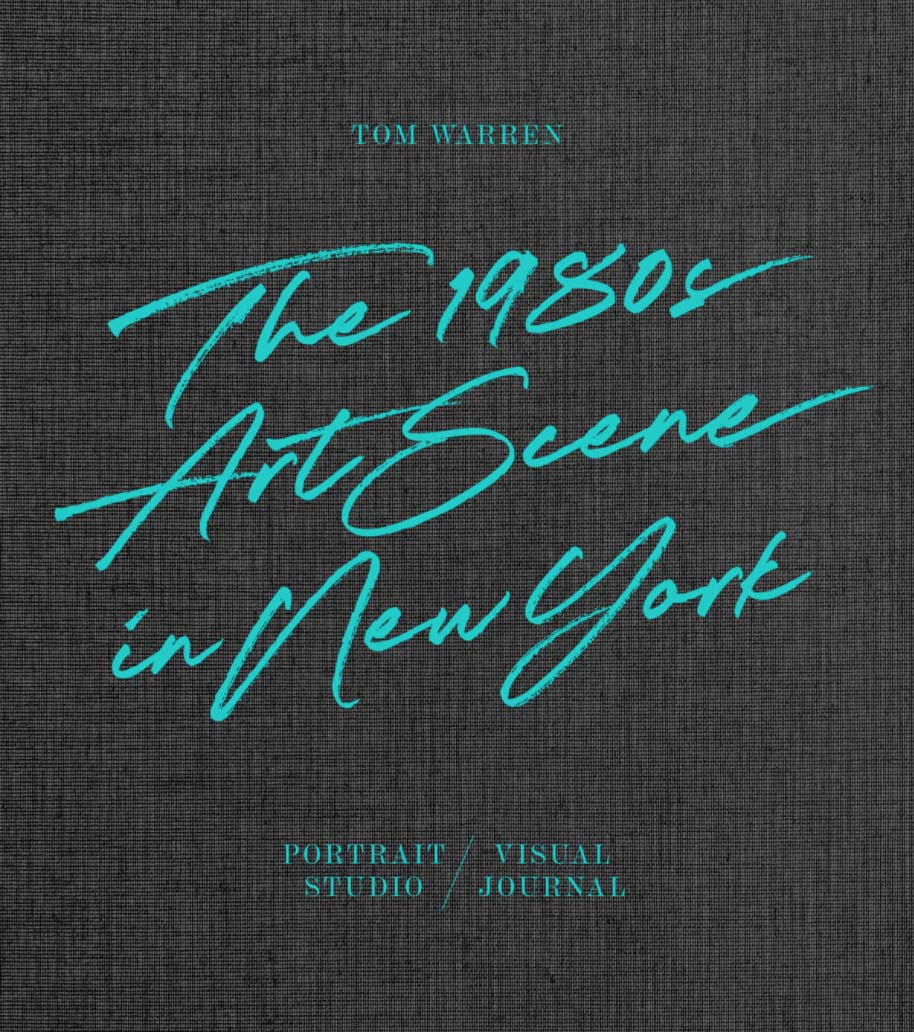
Tom Warren: The 1980s Art Scene in New York: Portrait Studio / Visual Journal – Hardcover

Tom Warren, the omnipresent photographer with a Hasselblad F1000, arrived in New York City in March of 1979 when CBGB’s, The Mudd Club, Xenon, Palladium, and Danceteria were in full swing and after graduating from Kent State University’s School of Journalism with a Bachelor of Science degree in Photo-Illustration. It was the year Leonard Abrams founded the East Village Eye, a local paper focusing on politics, art, and gentrification that would eventually publish Tom’s photographs and was the first to publish the word ‘hip-hop.’  Blondie was at the top of the charts, and the Talking Heads along with Brian Eno produced the album, Fear of Music, with its single “Life During Wartime” that paid homage to both the Mudd Club and CBGB’s. Other musicians playing downtown during the time and favored by Tom were John and Evan Lurie’s Lounge Lizards, the American No Wave band, DNA, and the Ramones who Tom first saw play back in Cleveland in 1977.  In a few short years, however, the AIDS and Crack Epidemics would be ravaging communities throughout the city while one neighborhood particularly hard-hit, the East Village, would simultaneously start reigning supreme as the epicenter of the art world. Every night, Tom recalled, “was another party, another art opening, another gallery opening.” And Tom thrived on this eclectic energy of his new home and city and placed himself front and center as observer, participant, and documentarian to this vibrant yet rapidly changing cityscape filled with the quixotic and visionary. For years, Mr. Warren took shots observing and joining the artistic milieu, kept photographs, preserved and archived—a blessing to art and cultural history. In his much-lauded 2004 exhibition East Village USA at The New Museum, curator Dan Cameron summed up this time and place perfectly:

Grand Master Flash (Joseph Saddler), Wild Style premier, Times Square 1983

“Imagine a village where everybody is an artist, nobody has or needs a steady job, and anyone can be the art world’s Next Big Thing. Such was the myth (and occasionally the reality) of the East Village in the mid-1980s when glamour and sleaze were nearly indistinguishable, and the boy next door was an androgynous, foot-high-peroxide-pompadour-sporting singer named John Sex.”

But when Tom arrived in New York, the large lot where The New Museum now sits was vacant and the area was still referred to as Skid Row, marked by Flop Houses that served the poor, often inebriated men who paid a nominal fee to sleep and bathe. Broken windows, unfortunately, were everywhere and it’s been estimated that by the end of the 1970s, eighty percent of this neighborhood’s housing units were abandoned or seized by the city for non-payment of taxes. And by 1979, the city had witnessed an exodus of over one million, tax-paying citizens who migrated for greener pastures. Many, at the time, believed New York was in irreversible decline. After all, the city was burning, literally, and with high crime, blackouts, looting, race riots, long gas lines, and financial doom and gloom, landlords simply walked away from their buildings because the income generated was less than the taxes needed to keep them. Enter, artists. The large number of vacancies allowed them to move in on the cheap. Or squat. It is why Tom, invited by a friend to build-out a loft in SOHO, first arrived in the city. 

Rene Ricard by Tom Warren

Around this time and over the course of the following decade, a number of New York City artist-activist and community-based groups were formed. The Rivington School, ABC No Rio, Fashion Moda, and Colab (Collaborative Projects)—to name a few—focused on fostering relationships with disadvantaged neighborhoods as a means to solidarity and discourse with working people on pressing issues. How fitting, then, when Colab staged The Real Estate Show, the first exhibition of the new decade, on New Year’s Day, January 1st, 1980, in an abandoned city-owned storefront at 123 Delancey Street to critique the city’s land-use policies that kept these very buildings vacant and derelict for so long. The show was billed “preemptive and insurrectionary,” and Tom was there that day with the founder of the protopunk band Electric Eels, John D. Morton. But the artist-run show was quickly shut down by police and the building padlocked, ironically, by the NYC Department of Housing Preservation and Development. 

The Real Estate Show’s participants did, however, raise some hell and secured press coverage in every major NYC publication and news outlet. Even art dealer Ronald Feldman and Fluxus pioneer Joseph Beuys showed up a few days later to support the cause. The power of the community, press, and activism forged lasting and positive results. One such result being that Tom had fallen in with the crowd who organized it, Colab, particularly with the artist Alan W. Moore, a founding member also of ABC No Rio, who invited Tom to participate in the much-heralded Times Square Show later that year with the likes of John and Charlie Ahearn, Jane Dickson, Bobby G, Coleen Fitzgibbon, Jenny Holzer, Keith Haring, Kenny Scharf, Becky Howland, Joseph Nechvatal, Tom Otterness, Kiki Smith, Judy Rifka and others. In the stairwell of a shuttered massage parlor at 201 W 41st. where the exhibition took place, two of Tom’s photos hung, snapshots of college students playing basketball, and with it the opportunity for meeting future subjects.

Judy Rifka by Tom Warren

Another lasting effect of The Real Estate Show to both Tom’s career and the larger, art-history narrative of New York was that in 1981 Mr. Warren was again invited by Alan W. Moore to do a show at ABC No Rio.  ABC No Rio, interestingly enough, was granted the use of an empty building at 156 Rivington Street by the city as part of the compromise to the eviction incurred by some of its members collaborating in The Real Estate Show at 123 Delancey Street. This act by the city firmly cemented ABC No Rio’s presence on the Lower East Side for decades to come. It makes for a fascinating anecdote: A burnt-out neon sign in the front window at 156 Rivington had once read “Abogado Con Notario” (Lawyer With Notary Public), but the only letters that remained when the artists moved in were “ABC No Rio.”  This new community arts center was billed as “a place where you could do things that wouldn’t even cross your mind to do in a gallery.”  And it is where Tom, inspired by American photographer, Mike Disfarmer, German portrait photographer, August Sander, French flâneur and documentary photographer, Eugène Atget, Lower East Side mainstay Arthur Fellig (aka Weegee), and the German conceptual artists and photography duo, Bernd and Hilla Bechers, conceptualized the Portrait Studio as a performance show and with his, Cambo 4×5 Studio View Camera began taking photos of the Lower East Side neighbors and many of the artists who lived nearby or whom he met along the way.  

On the second floor of that pivotal New Museum show, East Village USA, filled with photographs by a number of photographers who best captured the spirit of the age, Mr. Cameron states: “…Tom Warren’s unassuming manner enabled him to make portraits of hundreds of the period’s most memorable individuals.” Indeed, he did. And the best part is that his photographs are just as memorable and timely as ever. — de la Haba

Now Available on Amazon

Buy on Amazon

I am a heading

Here goes your text ... Select any part of your text to access the formatting toolbar.

Here goes your text ... Select any part of your text to access the formatting toolbar.

Turner Prize winner Laure Prouvost, who also represented her native France in the 2019 Venice Biennale, delves into the flaws and idiosyncrasies of language as starting point to create art that walks a fine line between what is and what is not, between fiction and reality, imagined or real. Through language, whether expressed or implied, written or painted, filmed or sung, Ms. Prouvost’s imagination runs wild, often in absurd and hilarious ways. Her work might best be enjoyed (and understood) with the words of her fellow countryman, François-Marie Arouet, in mind. Known better by his nom de plume, Voltaire, the internationally acclaimed 18th-century writer, historian, and philosopher—who also loved language and was a staunch advocate for free speech—once quipped: “God is a comedian playing to an audience too afraid to laugh.”  Because if we approach Ms. Prouvost’s The Person Behind Wants To Talk To You without the slightest bit of laughter or merriment billowing from within, we might wish to have our faculties checked. Especially if we turned around to see if anyone was actually standing behind us, yes, after reading it. —Gregory de la Haba

Buy on Amazon

I am a heading

Here goes your text ... Select any part of your text to access the formatting toolbar.

Here goes your text ... Select any part of your text to access the formatting toolbar.

Installation view at Almine Rech, London

From the Greek Dichotomia, the English variant takes its “dividing in two” meaning.  A family separated by divorce. A demarcation between two countries. However, contemporary parlance builds more into the meaning, an addition of “contradictory” or “mutually exclusive” division.  The dichotomy is the pitting of one against the other. The divide between classes, or religions, or between the vaxxed and unvaxxed, for example. Absent raging war, has civilized society ever seemed so divided? And herein lies the formative divisions on every battle over right and wrong, yours and mine, good and bad, between first (indigenous) and secondary (colonial). With dichotomy comes the tacit distinction between what is acceptable and what is not. And by the nature of this weighting of sides, the word compartmentalizes dissimilarities, flags them, walls them off, ostracizes them, and simplistically labels them as if everything can be painted with broad strokes of narrow judgment. History enlightens with proof that not all victims wilt, nor do all victors triumph. Think Maya Angelou and Lance Armstrong. Life is filled with a tremendous gray area quietly awaiting its moment to expose and reveal quiet truths often obscured by entrenched, or louder, opposed forces. 

To this diametric conundrum we often subject art; art and artists with their ability to live and breathe gray-area, to convey non-binaries, to inch open hard-felt boundaries with truth through beauty, through nuance. At the point of dichotomous classifications, nuance is so frequently lost in the immediate moment of flaring passions or heated arguments. Nuance, like the subtle texturing and layering of paint on one of Marcus Jansen’s canvases, requires time—and maybe some solitude—to discover. The media (decidedly rigid, problematically calcified) by contrast write nuance out of the equation entirely. They prosper by deploying dichotomy as a means to create conflict. And like a left or right-leaning arrogant politician, they use dichotomy to entrench and amplify discord which only further disunites the usual suspects: Republicans and Democrats, the rich and the poor, and most tragically—especially of late—blacks and whites.

Thankfully, artists, no matter how much they live on the extremities of life, thrive in the gray-scale zone where possibilities abound, where nothing is ever so cut-and-dried, and life’s ambiguity unravels slowly, spiritually, mindfully. It is in this space where polarizing forces find common ground; honest and constructive debate can be had and compromise agreed upon and met. It is here where reason—that which separates us from all other creatures—must be introduced.  The alternative is too costly. Because being irrational has no place on the road toward goodness—from unity to recovery, to love and peace.

In today’s socially and politically charged environment, who better situated to tackle such a thought-provoking and timely theme of dichotomy than an artist whose ancestral history—his very existence—is a paradox in and of itself. But before delving into the work, we must step back to examine some history in context with the above aforementioned. The past matters to Mr. Jansen and figures prominently in his pictorial vernacular. So, too, does ethos (character). From the two, life’s unpredictable and delicate nature, its sacred and profound purpose begin to manifest through multi-technical paintings replete with patterns and shapes draped in chiaroscuro, of lights and darks that carry the eye through a palette of subdued ochres and grays to further accentuate bold lines and notes of pure color that behold, in their classically traditional, ‘big look’ approach to picture-making, solemnity. Paintings replete with moral earnestness conveyed via a sensitive-eye-lens and tempered by past pain and loss experienced first hand. His subjects often imagined figures figuring out real things and without judgment.

Soldier With PTSD

“So they are no longer two, but one flesh. Therefore, what God has joined together let no man divide.” Matthew 19:6

Returning to Marcus Jansen’s embodied paradoxicality, his mother is black and from Jamaica, the Caribbean island largely established on the sugar trade using forced labor, mostly African slaves first brought over by the Spanish not long after Columbus landed in 1494 and then later, starting in the early 17th century, by the British who also brought indentured Chinese and Irish Catholics along for the degrading, empire-building, colonial ride. Contrastingly, his father’s ancestors just 25 years prior to the artist’s birth, were on the verge of wiping out one particular race entirely. The Germanic Nazis deemed themselves superior to all others and didn’t care that the Jews were white like them, privileged like them, German-speaking like them, educated or born with baby-blue eyes like them. Jews were of a different tribe. And thanks in large measure to people like Hitler’s right-hand man, Joseph Goebbels, the virulent and rabid antisemite, their time on this planet almost ceased entirely. Coincidently, Goebbels was from the same part of Germany, Mönchengladbach, as Marcus’ dad. A narrow spotlight on the past but not insignificant. Not for a man who was a historian as Marcus’s dad was. The devil is, as they say, in the details and the details reveal that evil resides right next door. As it always has. As it always will. 

Questions of Birth

Born and raised in New York City, it is to the fatherland that Marcus returned to live as an adolescent. And with Germany’s rich history of tribalism, it’s little wonder an afro-looking and youthful Marcus got bullied at school. In fact, mixed-race children during Goebbel’s lifetime were called “Rhineland Bastards,” a label first ascribed to the children born to German women and fathered by African-Colonial soldiers within the French Occupation forces stationed in Germany after the Great War. But it gets worse–hatred always does. When these kids reached puberty in the 1930s, a special Gestapo commissioned under the Third Reich was organized—with Hitler’s blessings—to begin sterilizing these poor children whom the Führer viewed as a contamination of the white population “by negro blood on the Rhine.”  More than five hundred young boys and girls who looked no different than Marcus Jansen were sterilized under this horrific regime.  

There is no digression from the artist’s work here. Stand in front of Questions of Birth, a portrayal of a saintly and matriarchal figure whose silhouette mimics that of paintings of the blessed-mother of Jesus, Mary, and think for a moment of those poor, young outcasts whose mothers were shamed—silenced (note the ‘x’ replacing a mouth)—and forced by these racist thugs to do as they demanded to their innocent babies and then question what you, whoever you are, would have done under such duress. This is a representation of motherhood, of no particular woman but of every woman, a figurehead of the feminine, holding tight her womb, her back clearly up against a wall, with but a single ear tuned to the scrawls on the blackboard-like surface behind her. Thin and frail linear markings running chaotically as backdrop, echoes of the countless and forgotten little ones whose cries beg to be remembered. Sadly, the wake of their existence is barely traceable upon history’s tragic, distorted pages. 

War Against Propaganda

In the large painting War Against Propaganda, the central character is more marionette than human, controlled by something beyond the picture’s frame—from behind the scenes—one who appears to be in a straightjacket of sorts, judging from the bold swaths of color painted horizontally across the knees and waist, and who appears to be either handing-out or tossing pamphlets. This may as well be a portrayal of Hitler’s very own chief puppeteer and dear neighbor, Mr. Joseph Goebbel’s, Reich Minister of Propaganda from 1933 until 1945. If ever history has showcased a more straightforward example of the dangers of one political party controlling all forms of media and communication to the masses, it is this. Goebbel’s not only favored book burnings and condemning ‘degenerate’ art, he packed his hate and ideology into every newspaper article, radio show, magazine, movie, and artwork produced in Germany at the time. His methods came to define ‘propaganda machine.’ So the next time a professor,  politician, or anyone screams from the rafters to silence something, anything, no matter what, be weary. Be very, very weary. At present, we can derive balance from dichotomous views, which is perhaps why Jansen favors dissent. 

The paintings at Almine Rech are the sum total and mature memesis of Marcus Jansen’s life: an amalgamation of the social, critical, and political commentary he’s explored since the late 1990s. But it was and is his very personal role—his subjective experiences—in the Gulf War, Desert Storm in particular, where an explosion rocked his camp and entire body, killing dozens and injuring more, that would reverberate through his entire oeuvre with lasting effect. This seminal moment, in fact, underpins his PTSD, fissuring his being—consuming it—like a dark crevice in many of his paintings. Fortunately, it was the time he spent in recovery at Walter Reed Army Medical Center in Washington D.C., after being discharged from the Army in 1997, during art therapy sessions, that would both fortify his artistic practices and broaden his creative scope. Walter Reed is where the majority of U.S. military amputees and combatant casualties are cared for. Veterans in wheelchairs or those with prosthetics relearning all of life’s taken-for-granted fundamentals like walking are a common sight. And one not easily let go of. Empathy runs deep for one’s fellow human here. Mr. Jansen knows all too well that every soldier’s real battle is only just beginning after returning home from war as they adjust back to civilian life without the same body and mind they had prior to combat.

Confined Without A Soul

Confined Without a Soul amounts to a painted vestige of valor, dignity, and honor of the men and women with whom Marcus served and is entirely familiar. The compositional pull of this painting is due to the centrally placed, seated soldier, his body-core forming a near-perfect square smack-dab in the middle of the painting’s perimeters and framed by broad shoulders adorned with epaulets, while the subject’s elbows rest steadily atop—and bringing the eye’s attention to—prosthetic knees, one prosthetic leg angled askance. As if incarcerated, the enclosed space around the soldier renders an array of irregular squares—windows with no view—and rectangles, perhaps an examining table at Walter Reed. In concert, the shapes heighten the perception of just how boxed-in and confined a soldier must feel after returning home physically, corporally less than. During the Civil War, an estimated 60,000 limbs were amputated on the battlefields in makeshift hospital tents in order to protect a soldier’s life from infection that would eventually kill them if the bullet already hadn’t. Many soldiers feared the “Sawbones” (slang for military physicians who did the sawing-off of limbs and extremities) more than death itself because most enlisted men were poor farmers who could never again sow seed without arms or plough fields without legs. Amputations reduced warriors to invalids. Their raison d’être cut from their very soul all in the name of a new country’s unification vis-à-vis emancipation, upheaval sewn by dichotomy.  

Army doctors (Sawbones) performing an amputation in a make-shift hospital during the U.S. Civil War (1861-65), c. 1863. (Photo by Hulton Archive/Getty Images)
After Hurricane #4

In the small paintings After Hurricane #1 through #8, and in earlier and larger works by Mr. Jansen (Spotlight exhibited last year at the Baker Museum or Streets exhibited at the Kemper Museum in 2008 come to mind) his toy-soldier-like figures are standing (or sitting) on a precipice, or a proscenium, and looking out over some forlorn landscape or into the abyss. Except in this series, soft hues of pink, purples, yellows, and blues prevail and dominate over the infrequent amoebic and myriad polygonal shapes with jagged edges, occasionally rising pyramidically yet torn asunder, leveled. In these works, brevity is matched only by augustness and breadth, and often in an aftermath scene of grave consequence. These paintings are representative of every heap of rubble left after every deadly storm, tornado or earthquake anywhere in the world. They are all too familiar. All too universal. We are all together in the same small boat, they remind us, but there are no life vests under the stern. Only vivid reminders of past calamities etched in our consciousness that continually mock our fragility and impermanence.  If lucky, we might open our eyes to just how limited time truly is on this immensely vast ecosystem with a faltering thermostat. In all, we’re confronted with a rueful and disquieting setting not much different than the empty lots or the fire-ravaged, abandoned buildings that littered the South Bronx in the ’70s and ’80s where Marcus once lived. Achtung, the soldier-artist cautions: History, like nature, repeats itself over and over again. 

After Hurricane #6

Marcus doesn’t shy away from his service or the trauma he’s experienced from it—he wears it all on his sleeve as the subjects in his paintings wear their rank on their sleeves. Rank, however, is less important to the painter than distinction. In A Confident Wounded Warrior, distinction comes in the form of a double amputee. Yet, the postured confidence turns questionable. Two empty bottles lie haphazardly on the floor. Perhaps the subject is tossing a bad habit once and for all. It is important to note how alcohol and drug abuse are leading causes of depression and major contributing factors of suicide in the U.S. military among its veterans. Since the start of the pandemic, the number of service members who’ve committed suicide is ten times greater than members who have fallen from COVID. Imagine a policy shift akin to the covid mobilization aimed at aiding mental health for all, particularly our vets; at least this is the type of thought engendered by Jansen’s work, the martial subjects hunched despondently. We might dare to think veterans would never again feel helpless. Last year alone, over 500 service members in their prime took their own lives. Our soldiers are all too aware of the insanity in these numbers. And it pains each and every single one of them—as it should pain all of us. These are the faceless and nameless that Mr. Jansen paints and doesn’t want the world to forget. 

A Confident Wounded Warrior

Such wounded warriors and the paintings Marcus Jansen creates in their honor embody the pathos of Käthe Kolowitz’ bereaved mothers and fatherless children coupled with the compositional magnificence and angst of a Francis Bacon. These are works that do not solely and expressly serve social justice whims and current demands. They elevate humanity and art alike by showcasing greater purpose in conveying simple, universal truths that should bring people closer together and not punish or castigate them for refusing to see eye-to-eye. His paintings walk with those willing to get closer to the ‘frontline’ and to witness life’s harsh and cruel realities up close, but they don’t push anyone off a cliff for not wanting to. With equal clemency, the past is truly of consequence, Mr. Jansen informs us. Yet his thorough, thought-provoking, and positively delineated attention to it—his commemoration of affliction—contributes greatly to his, and to our, good fortune. History and the now is not a dichotomy. They, others, and us, we, are not either. Then is a part of now and they are a part of us. And so Jansen’s work functions, too, on the level of catharsis, ever-evolving, for all mankind to experience and heed. —Gregory de la Haba


Buy on Amazon

I am a heading

Here goes your text ... Select any part of your text to access the formatting toolbar.

Here goes your text ... Select any part of your text to access the formatting toolbar.

Miya Ando in her Long Island City studio, 2021

More than fifty percent of the world-famous katana swords (used by the Samurai) deemed National Treasures in Japan are from the Bizen province in Okayama Prefecture, the ancient and ancestral land of the American-Japanese artist, Miya Ando, a descendant herself of these venerated swordsmiths. This, too, is the land where the revered Bizen ware (Bizen-yaki) was born more than a thousand years ago. Ceramics from this region are still fired in one of the renowned Six Ancient Kilns of Japan. This is a landscape of flowing rivers, majestic mountains, plush forests, and sacred Buddhist temples that beckon devotion, contemplation, and spiritual alignment with nature. It is little wonder—after spending many of her formidable years here with her grandfather, a head Buddhist monk in Bizen—that Miya Ando’s art has such a marked reverence for the natural world. In fact, it has become the lifeblood of her flourishing art practice.  

Detail of Miya Ando’s hand and most recent, celestial-inspired work.

“It comforts me to look at paintings that feel endless and vast, where, in my mind, I can float away to celestial spaces of quietude.” Miya Ando

Large vats of natural, fermenting indigo abound in Miya Ando’s studio

In anticipation of her upcoming LACMA show, I was invited to take a first look at Miya’s new work employing studio-made, premium-grade indigo on giant sheets of handmade Japanese paper while also observing (quietly) how she proceeds forging ahead making works of exceptional beauty, tranquility and calm during NYC’s stringent COVID-lockdown. These new singular works by Ms. Ando envelope nature’s fleetingness and allure the viewer into solitary moments of absolute presence. — de la Haba

Artists Miya Ando & de la Haba
Buy on Amazon

I am a heading

Here goes your text ... Select any part of your text to access the formatting toolbar.

Here goes your text ... Select any part of your text to access the formatting toolbar.


Recent Works

William Turner Gallery
Santa Monica, CA
Dec. 5, 2020—Feb.10, 2021

The mimesis of nature’s physiology and miraculous wonders created by the LA painter, Andy Moses, implemented through an obsessive, decades-long, trial-and-error search at understanding—as an alchemist would—the varying properties of pigments vis-à-vis their contactual and visual interaction to light and surface, is, simply put, mystifying. These are masterworks of undulation in paint. Hypnotic mind-fucks fashioned by and charged with the vibrational energy of the natural world, both geologic and galactic, and created with the intention of putting life on pause momentarily just as the sight of a giant wave in Nazaré, Portugal, or a visit to Victoria Falls on the Zambezi River would. When attunement to the transcendence of life itself is given an opportunity to awaken, and is. Moments when the rare, hidden, or supernatural reveal themselves so as to captivate and engulf the present entirely. This, in short, has been the lifelong objective, pursuit, and catalyst behind the art practice of Mr. Moses. 

Like a nautilus shell’s logarithmic growth spiraling outward from its center, Andy’s incandescent circular paintings, six-feet in diameter, spiral outward from their centers and are just as flawless in design and rhythmic in their telling of, or alluding to, some sacred geometry. In Geodesy 1505 and Geodesy 1508, Mr. Moses pays homage to earth’s shape (or earth’s shape as seen from the moon) and revels in the pictorial mystery of the cosmos, of the sphere, much the way Da Vinci attempted to understand—with his Vitruvian Man—the divine proportions of man. 

With the large, hexagonally-shaped Geodynamics 1214, we are immediately reminded of nature’s countless six-sided elements, from snowflakes to the hexagonal cells constructed by honeybees to house their sweet honey. A stunning and luminous work of psychedelic intensity, of super-charged reds and blues that meander across the picture plane kaleidoscopically.   

Born in Los Angeles in 1962, Andy Moses studied with Michael Asher, John Baldessari, and Barbara Kruger at the California Institute of the Arts from 1979 to 1982. He moved to New York after graduation to work for the artist Pat Steir and had his first solo show with Annina Nosei who first represented Jean-Michel Basquiat at her eponymous SOHO gallery on Prince Street. In the 1990s, Moses lived on Long Island’s East End, in Montauk, where he hosted art shows with his friend and legendary photographer, Peter Beard. In 2000, he moved back to LA and in 2017, the Pete and Susan Barrett Gallery at Santa Monica College conducted a thirty-year survey of his work. 

I spoke with the artist after his recent opening at William Turner to delve deeper into his fascinating life and art practice. 

dlH: One cannot help but think of a mandala (Sanskrit for circle) from the ancient worlds of India and Persia when observing your work because these visual embodiments of higher thought and deeper meaning are, as with your work, meant to center the individual and encourage introspection. Any connection you’d like to share?

AM: The comparison to Madala’s is interesting. I work in the tradition of gestural mark-making that comes out of pure abstraction but also in alluding to various aspects of the universe on the micro and macro scales. In both my tondos and hexagons everything is converging towards a center point—or emerging outward from the center.  As with a Mandala, I’m keen on making contemplative objects or in suggesting a cosmology representative of the entire universe—and our connection to it.  Of representing energy and matter at the subatomic level, and that which is fluid or in a state of flux and impermanent. Everything transitions from one state to another and this notion of fractal patterning or patterns that repeat across all scales fascinates me. 

dlH: So unlike a traditional painter of landscapes who works from nature, you’re after taking the actual life-forces from nature to work with? 

AM: Exactly. I work directly with the forces of nature. I call them gravity dispersions, viscosity interference, and fluid dynamics to create imagery that suggests these forces of the natural world at work.

dlH: Where did you go to art school?

AM: I went to Cal Arts from 1979 until 1982 and studied with John Baldessari, Michael Asher, and  Douglas Hueblar. I  had one semester with Barbara Kruger but it was my most memorable class. Barbara’s point of view about art and society and how art functioned in society was laser-sharp. She had a good sense of humor also. I really love her work and know she still teaches in spite of all her success which really shows her dedication and commitment to teaching.

dlH: How long did you live in New York? 

AM: For 18 years. Moved there in 1982.  Right after Cal Arts. Things were really heating up in New York in the early eighties.  My first job was working for Pat Steir as a studio assistant, and for her husband, Joost Elfers, on his book projects. Pat was really breaking some new ground with her paintings at the time. She had an interest in both contemporary painting but also art historical painting. It felt very different from a lot of artists at the time.

dlH: Tell us about your friendship with Jeff Koons?

AM: I met Jeff in 1982. We used to go to these rambunctious parties at writer Alan Jones and his partner Sue Etkins loft in Soho that was filled with lots of people, energy, laughing, and arguing. Every now and then a fight would erupt. Like what I imagined Cedar Tavern would have been like in the forties and fifties. It was at these parties where I met Donald Baechler, Saint Clair Cemin, Colette, and many other young artists.  

Jeff and I have remained friends. I remember being at the opening of his first show in the East Village at International with Monument called Equilibrium. Its featured pieces were a bronze life raft, bronze aqualung, and the equilibrium tanks with the floating basketballs. I remember looking at the work and then also seeing the astonished looks on everyone’s face. It was clear to me that Jeff’s life from that day forward would never be the same. 

dlH: When did you first meet Peter Beard?

AM: I met Peter in Montauk, summer of 1990. Peter was great. Larger than life. He was working on his diary collages in these giant notebooks. They were incredible. I had never seen anything like them. This was before he started doing the collages on a really large scale. Interesting people were always dropping by to say hello. I met Paul Morrissey, Terry Southern, Gerard Malanga, and Julian Schnabel through Peter. I had stopped surfing in ‘82 after moving to New York but in Montauk, I was able to get back in the water. Peter’s former property caretaker, Tony Caramanico, ruled the surf out there. He was the unofficial mayor of Montauk surfing and all kinds of famous surfers like Tom Curren, Kelly Slater, and Joel Tudor came to visit him. My favorite surf spot was called The Ranch, right in front of Peter’s house. Another great surf break was in front of the Warhol estate where I’d surf with Julian. My studio was on Industrial Road.  Peter and I did shows there every summer along with the artist, Thomas Moller. The whole town would show up because everyone knew and loved Peter. It was a fun and exciting time. 

dlH: What other artists did you roll with?

AM: I knew Matt Mullican, our families lived right around the corner from each other in Santa Monica.  A few years ago, his mother Luchita Hurtado’s work took off in a big way at the age of 96. She was amazing. Lawrence Weiner and David Salle visited Cal Arts when I was a student and David was actually the one who got me the job with Pat Steir. I met Rudolf Stingel when he showed up at my door one day on the advice of the art dealer, Tanja Grunert. Rudi ended up getting a studio right below mine and was making those silver paintings, spraying through mesh on wet oil paint. I loved those. Back in 2019, I saw his retrospective in Basel and it’s amazing how much ground he’s covered over the last 30 years.  

In the late eighties, I hung out with John Bowman, Anne Shostrum, Alexis Rockman, Mark Tansey, and Robert Yarber. All really great artists and we’d go drinking on Friday nights.  It was a fun and lively group. In the early Nineties, I met Sean Scully through California painter, James Hayward.  Sean used to come to my loft to watch the fights. He loved the fights. We would always give Sean this big throne-like chair to sit in with the best view of the screen. Sean has the funniest dry humor of anyone I know and is a brilliant painter. New York in the eighties and nineties was like a small village. I met so many artists at that time who now fill the walls of contemporary art museums and the pages of art history books. I have great memories of my time in New York.

dlH: Tell me your funniest art-world story?

AM: New York in the eighties was definitely about the have and have nots. It always felt like your luck could change almost overnight in either direction. I have a story that’s funnier to me in retrospect than it was at the time.  An art advisor brought Ethel Scull to my studio. She and her husband Robert Scull were big collectors of pop art in the sixties. I had even read about them in Tom Wolfe’s  The Painted Word. Sotheby’s sold most of her collection after Robert died. It fetched a very big price at the time and set some records, too.  Needless to say, I was excited when she came to my studio, especially when she said “this is the most exciting work since Jasper Johns.”  I was only 26 at the time and thought, “finally, someone recognizes my talents” ( laughs).  She walked around the studio and said she wanted to buy every painting. I was sure from that point on my life would never be the same. The next day rolls around and I hear nothing. I call the art advisor to ask ‘what’s up?’  He says: “I didn’t want to tell you but she’s a little nuts.  She does this all the time. She likes to go to artists’ studios and pick out things but she never follows through. It makes her feel important like she’s still part of the scene”.  So for about 12 hours I really thought my ship had come in (chuckling). 

dlH: Why did you move back to LA? 

AM: In 1999, I was ready for a change. I had lived ten years in Montauk and having that connection back to the ocean was important for me. I felt like my work was about to undergo some changes but wasn’t sure how that was going to happen or what they were going to be. I moved back to LA just before New Year’s in 2000 and found a shack on the water in Malibu. I made some small paintings there. Having the water transform into sky and then have everything morph back into water was important for me. Even though I had lived in Montauk on a cliff overlooking the ocean my studio was on the opposite side of town.  Now I could live and work right on the water. I immediately started making paintings where almost everything was removed. I worked in a pure, pearlescent white pigment. I started making paintings that were elongated rectangles to reflect my new panoramic environment. You could see subtle hints of the sky and the ocean. Within two years,  I was making my first concave panoramas. I then took a larger studio in Venice and drove down the coast each and every morning from Malibu and every evening make the beautiful drive home. These drives were most certainly beneficial to my work. And after twenty years of being back home, I can now see how essential it was for me to return to where I was from. 

—de la Haba

Buy on Amazon

I am a heading

Here goes your text ... Select any part of your text to access the formatting toolbar.

Here goes your text ... Select any part of your text to access the formatting toolbar.

Max Ernst and Yves Tanguy with Urs Fischer

Installation view, Nahmad Contemporary. Photographs by Tom Powel Imaging.

September 17- November 5, 2020

Nahmad Contemporary
980 Madison Ave, NYC

Nahmad Contemporary has, with their current exhibition SUPERUNKNOWN, given New Yorkers a reason to cheer. Featuring rarely exhibited and important paintings by surrealist masters Max Ernst and Yves Tanguy created between 1924 and the end of World War II, arguably some of humankind’s most turbulent and barbaric times, these unsettlingly dark and foreboding surrealist gems are pitted against an immersive backdrop of bespoke, bright-colored wallpaper by contemporary artist Urs Fischer. This contrast is significant and as stark as the bewildering worlds created by each artist.  And, according to the Press Release, the exhibition “is both a counterpoint to and expression of our own times.” In truth, however, it is so much better and more than that. 

Installation view, Nahmad Contemporary. Photographs by Tom Powel Imaging.
Masks and the face transplants of WWI

Both autodidactic artists, Ernst (b.1891, Brüel, Germany) and Tanguy (b.1900, Paris, France) experienced WWI first hand and—just as importantly—as mature men fully aware of and in-tune to their surroundings and the socio-political events unfolding before their eyes.  Both were drafted, served in the army with their respective countries and were witness to the vast destruction and human toll this ‘Great War’ had on mankind with an estimated 40 million casualties.  Ernst was so overwhelmed from the war he wrote in his journal that he died at the start of it and “was resurrected on the eleventh of November 1918″ at its close.  When the two met in Paris in the early 1920s and became part of André Breton’s circle of Surrealist artists fascinated with Freudian-like psychoanalysis (and from where many of their painting’s titles derived from such textbooks), maimed veterans, or as the French called them, mutilés, were a common sight in the cafes and on the city’s streets at the time. In previous wars, these men would have expired on the battlefield from their wounds by gunshot or grenade or from gangrene brought on by amputation or infection. But with improved advancements in medicine and surgery during the advent of the 20th century, many soldiers ended-up surviving these horrific bodily inflictions but often at an even greater psychological cost. For some, faces were so badly damaged their families could barely recognize them. Such daily visual reminders coupled with the ever-present psychological aftermath of war no doubt resonated deeply with both men. In fact, Tanguy’s amoebae like forms floating hopelessly in desolate, bleak-looking tableaus, imagined landscapes which have more semblance to the apocalyptic world Cormac McCarthy created in his Pulitzer-Prize winning book, The Road , than to a recognizable place in or around Paris, surprisingly mirror the custom masks and facial constructs of molded ears and noses (Images 1 & 2) that artists and sculptors were making to help in the healing process for the countless disfigured soldiers in their midst. 

Reason enough, one could presume, for an artist like Tanguy to paint imagined worlds that carry with them an ‘ominous sense of disquiet and isolation’ executed in tonal scales of grays and ochre as in Time of Foreboding (1929). Or for Ernst to create baffling yet profound imagery like Bird Cemetery (1927) that conveys an air of dark and immense gravitas with thick, impenetrable and stoic, vertical delineations in paint that may indeed, as the Press Release states, defy any ‘prescribed reality’ but, moreover, it also most certainly portends to the extreme, brutal and sinister reality then gearing up to march on the horizon all across Europe.

Tanguy, Time of Foreboding (Photo courtesy of Nahmad Contemporary)
Tanguy, 1927, Untitled (Photo courtesy of Nahmad Contemporary)

By contrast, Urs Fischer (b.1973, Zurich) grew up in the most scenic of places, Switzerland, during peacetime when smaller and faraway wars were watched on CNN from the comfort of home. Yet true artists, no matter their upbringing, have an innate sense of breadth and scope for the world around them and like Ernst and Tanguy, Mr. Fischer is capable of finding and creating light where and when there is none. For SUPERUNKNOWN, the entire gallery’s wall space is enveloped in his Gap-toothed City, a montage of photos he took of New York City’s eyesores: graffiti, metal fencing, unsolicited ads, regulatory notices, boarded lots and the like. But Fischer enhances his photos by utilizing the photographic negative as a starting point before further manipulating the picture’s color into their complementary counterparts with results that are both surreal yet familiar. Something that recalls, perhaps, an isolated yet heightened experience from a positive LSD trip. 

Max Ernst, Bird Cemetery (detail)
Installation view at Nahmad Contemporary (photo courtesy the gallery)

Even though Urs Fischer’s opus takes over the gallery’s walls, he doesn’t steal the show. He catapults it into the mind’s eye and illuminates SUPERUNKNOWN’s brilliant choreography of past and present, of light and darkness, of blight and beauty, of sharp contrast and polar opposites, and of survival and death. At once gratifyingly rich and visually stunning, SUPERUNKNOWN can also pleasingly be seen as an ideal case study as to why art and artists matter and, even more importantly during the pandemic’s current, angst-filled climate, stresses—with the mind’s eye fully dilated—how important living in the now truly is and why embracing the wisdom, experiences, and beauty of the past can help guide us on our continuing journey forward. Peacefully. Mindfully. —de la Haba

Buy on Amazon

I am a heading

Here goes your text ... Select any part of your text to access the formatting toolbar.

Here goes your text ... Select any part of your text to access the formatting toolbar.

PRODUCT OF CHINA
Greg Haberny, Product of China, Mixed Media, courtesy the artist and Lyons Weir, New York

What gets the creative wheels spinning? For New York artist Greg Haberny destroying, gutting, gluing, stapling, shooting, burning, deconstructing, dismantling, and basically blowing things up gets them going pretty good, this, his modus operandi in making art and riding life. And for him, life is all about making art, solo, for hours on end in his Chelsea studio aptly nicknamed The Bomb Shelter. Situated inside an old carriage house beautifully hidden from the street, behind an unassuming early 19th-century domicile off Seventh, Mr. Haberny found this little piece of Shangri-la to keep creativity moving along. Here all the time, he doesn’t waste time bullshitting or going out to party or futzing about. His work is his zen, his peace, his all-night party, his way of grinding those wheels to the pavement. To catch Mr. Haberny, to chat with him, is to find him at his art openings or at art fairs in Miami, Cologne or at VOLTA, New York, where I spoke with him and his dealer Michael Lyons Wier this past month and where both were satisfied from the turnout, the quality of collectors passing through, but mostly from selling-out their booth of Greg’s work.

Mr. Haberny creates by first becoming master destroyer, acute dissembler, before the metamorphosis to master builder begins, reassembler of the wreckage and carnage created priorly with absolute and total abandon; for with each new work, worked on, labored over, and scrutinized for months, Mr. Haberny acts, too, as sole critic/debater, debating both sides of the coin, both sides to the latest news-breaking stories out of FOX 5 or 60 Minutes whence he harvests material, simultaneously, unabashedly, defending and prosecuting with equal measure and emerges, eventually, with a bang, originating an entirely new universe regurgitated from current events from here in the states or direct from Beijing for it’s all the same, or so his work seems to convey; all part of his repertoire, all for the taking and for the part-taking, and all of it history and feed for the fodder -you can smell it in the studio, the glue gun working up a storm on overdrive- and General Grant’s description of history as ‘one god damn thing after the next’ fit’s perfectly well within Mr. Haberny’s very hands-on, constructionist, vernacular. The guy moves around quickly from the floor where he’s assembling a new work to work table where paints are mixed and found objects dismantled, from one painting to another, continuously, trying to understand things by breaking them down, cutting them open. This is a chop-shop except legal.

Or, perhaps, more biology lab where it’s not a frog but Micky Mouse getting pinned-down, dissected. His wheels get oiled from many issues and topics of the day: corruption, greed, train-wreck celebrities and reality stars of little worth, talent or moral standing; of priests, rabbis, and politicians gone bad and of storms and corporate governance gone worse and of bailouts for banks and props to the well connected “all while the little guy gets reamed in the ass incessantly down on Main street with everyone watching and no one doing a god damn thing about it because American Idol is on and we must vote for the next big star if only we could reach the cell phone that fell to the floor for we are too comatose from sugar-induced, fat-laden, diets of Big Gulps, Chunky Monkey and nachos with cheese whiz, amen’ he says in one breath.

“It’s all madness, worse if you let it get under your skin, if you read the papers” which he does and uses in his work, “and it piles up ever so high like horse shit would in this stable if not cleaned-out daily and had there still some horses here.” This madness and insanity is what Greg’s work screamingly portrays via the accumulation, destruction and assemblage of things like, but not limited to, broken tea cups, porcelain figurines, taxidermic squirrels with crack pipes, dollar signs and scrawled messages with dire warnings; of heaps of trash, mounds of rubber tires or of computers not even a decade old. His work mimics those massive floating bodies of plastic bottles swarming and clogging our oceans, rotting and emitting toxic gases and damaging the very eco-systems that keep us alive and best evidenced in Haberny’s epic piece Beautiful Disaster displayed at VOLTA NY.

Greg Haberny, Beautiful Disaster, Mixed Media, courtesy the artist and Lions Weir, New York

Greg keeps going: “We’re victims of our own success, gasping for fucking air, fresh water and green space and we need a break from the monotony, from the petty, from all the red-tape in getting things done, now, and of ever-higher taxes to pay for things unseen, undone or overdue and the high cost of rent unless you live in god forlorn Detroit.” Yes, Detroit, now there’s a perfect metaphor for Mr. Haberny’s work: it’s ruinous, bellied-up, bankrupt, shattered and dying, no, it’s bleeding, Motor City is dead. But look closer and listen and you’ll see people still living there and they have a pulse and hearts and they call Detroit home and have pride and families they love and all they want is to better themselves and their city. You’d think our government would invite billionaires to step up to the plate and offer billion-dollar prizes for solutions, offer tax breaks and immediate incentives to help change that ugly disaster but no, we gotta stop malaria in Africa first and provide condoms second while homes burn, people abandon, kids kill and life keeps sucking for millions right here on our own shores.

That’s why I say thank god for artists, like Greg, who communicate freely their thoughts, opinions, and rage. Look closer and you’ll see his work is on to something: you’ll see that there is indeed hope in destruction, somehow, amazingly, just like after 911, when New York, and the rest of America, was inundated with kindness and help from the world over, proof positive that beneath all the wreckage, beneath wastelands and beyond the waste, beneath all rubble, past all negativity, that there are green-shoots indeed, flickers of positive light; that rays of technicolor exist, of life yearning to get to the surface again, to change face of that surface, like artists moving into downtown Detroit the way they moved into the Lower East Side, Williamsburg, or Wynwood, and when nobody else wanted to except the poor because they didn’t have a choice, and those initial gestures born out from creative migration helped make immediate, noticeable and positive change to those neighborhoods. But there’s always a storm first, there has to be, always carnage, destruction, and loss of life or material home first before we listen, concur, and make amends, make better. Why can’t we ever make better those things that are already good or OK or not so bad?

How long must we choke on our own crap, on ignorance, on bigotry, on diesel fuels and fossil fuels, and on athletes who cheat, powered on steroids, turning the Tour de France into the Tour de Farce before a collective gasp, no, a collective scream of “I’VE FUCKING HAD ENOUGH ALREADY!” is belted out loudly and clearly and daily over NPR airwaves? We need more rage! Unfortunately, as long as home runs are hit and ballparks fill with hundred dollar and up seats and Lady Gaga keeps changing attire there’ll be no such thing, who gives a shit anyway? Who the hell cares? Who can even tell anymore what’s important when we’re forced-fed Kim Kardashian’s ass on the same platter and with equal measure as with all the downbeat updates coming out of the Near, Middle, and Far East. Maybe history really is ‘one god-damn thing after the next’, repeating itself over and over and over again. The thought numbing and not at all comfortable. Which way to turn?

In Cormac McCarthy’s The Road we’re led into an environment that is not so remotely unlike a Haberny landscape, of a Haberny installation, of Detroit or New Orleans after the flood, environments of startling destruction and unsettling despair. Haberny’s inventive worlds, too, from the looks of it, are just as dangerous, with prickly barriers and sharp edges and act as a distraction from his core principle: to expose and enlighten. Because truth be told, Mr. Haberny does give a shit, the way Goya gave a shit. His work is his fight. His reporting. His vigil. His is an oil spill choking the oxygen not out of beautiful clear Floridian waters but strives to suffocate hypocrisy wherever it rears its ugly head, to choke it at the source directly and with confrontational vigor and Shakespearean swagger in this our society that wants to have its cake and eat it too.

Greg Habery, Product of China, Mixed Media, courtesy the artist and Lions Weir, New York

You can almost hear Greg’s laughter, his mockery, in a piece that spells out ‘FAT’ in thick globs of dripping, golden, goop, -looking like gilded shit, quite frankly- and as such, the shimmering and alluring value and power of gold blinds us into believing everything on the surface is just fine. But we know better. The system is broken and with the gold standard gone long ago, the system ran amuck and the printing of dollars, of Quantitative Easing, 1, 2, and 3, and of easy money for banks and not for the little guy makes it all stink even more. In fact, it stinks to high heaven. But like the magnetism emanating from within McCarthy’s masterpiece forcing you to walk along all the gray matter and debris and not put the book down, magnetism exposed via the gravitas of caring, to care for, as in the tenderness bestowed by the ill father to his scared little son and in the hope they’ll survive together, in the hope that humanity will survive, Greg Haberny’s work also gives hope, has light, is breathing life and makes us realize that along with the danger and after devastating loss we must always be on the lookout for nourishment, bright spots, for shelter from the storm, for reminders that Nirvana exists and is here on this earth.

Because as more shit gets piled higher and higher, as history passes with each and every day, the line between friend and foe, good and bad, gets blurry sometimes, and questionable. Always will. But sooner or later we’re all forced to make decisions, to make a stand for what we believe in and must jump off the fence and choose which side of it to live on, to live by -the enemy, the bad guy, the big bad wolf, the greedy banker, the storm, the terrorist, will always be there, right around the corner- but so too is the rainbow, remember that! But in Greg’s work the colors of it are running, dividing, morphing into something else, something entirely new, for better or worse, but what it is most important, most certainly, is evidence, evidential remains out of his quest and pursuit of truth to make art and hence, from doing so, safeguarding the rainbow’s everlasting appeal. For its appeal, its sight, even if fragmented and half-hidden by dark ominous clouds, is what gives hope to live and carry on, to move forward along the path to enlightenment.

Mr. Haberny is represented by Lyons Wier Gallery in New York.
 

Buy on Amazon

Shelter Serra

‘Fake Roley’

The ‘Fake Roley’ by Shelter Serra is a simple, eye-catching…
Read

Gary Wong

Decoding The Indecipherable:

Prologue Nestled in an alcove of a large Victorian home…
Read

Richard Prince:

A Freak ‘On The Road’ To ‘IT’

A Critique of Freaks (the latest art) by Richard Prince…
Read

The California Locos

The California Locos

“Artists have a responsibility to their work to raise it…
Read

Dave Tourjé

Art Note From Art Basel, 2016: Dave Tourjé, Evel Knievel and The Duende Spirit

Originally published in 2016 (Dave Tourjé, 2 Late 4 Luck,…
Read

ABMB 2022

Most Fascinating (Paintings) at ABMB 2022

Francis Bacon's Man at a Washbasin at Marlborough Gallery showcases…
Read
Francis Bacon's Man at a Washbasin

Julian Schnabel

Julian Schnabel: Modern Painting’s Quantum Mechanic

An Analysis of the Artist’s Latest Work: PREDOMINATELY NATURAL FORMS,…
Read
Natural Forms Near the Fountain of Youth

Billy The Artist

East Villager Billy The Artist Climbs Atop Ai Weiwei’s Fence To Shine A Light On It

The amplitude and potency of art are in its power…
Read
Homage to Ai Weiwei — Central Park

Tom Warren

Portrait Studio

From the book: Tom Warren: The 1980s Art Scene in…
Read
Tom's book cover

Laure Prouvost

Turner Prize Winner Laure Prouvost

Turner Prize winner Laure Prouvost, who also represented her native…
Read
Laure Prouvost

Marcus Jansen

The Dichotomy of Art & Life: Marcus Jansen’s Victims And Victors at Almine Rech, London

From the Greek Dichotomia, the English variant takes its “dividing…
Read

Miya Ando

Indigo Calm

More than fifty percent of the world-famous katana swords (used…
Read

Andy Moses

Andy Moses Recent Works

Recent WorksWilliam Turner GallerySanta Monica, CADec. 5, 2020—Feb.10, 2021 The…
Read
Andy Moses at Joshua Tree

Max Ernst & Yves Tanguy w/ Urs Fischer

SUPERUNKNOWN

Max Ernst and Yves Tanguy with Urs Fischer September 17-…
Read

Greg Haberny

Greg Haberny: Making Art and Riding Life

What gets the creative wheels spinning? For New York artist…
Read