Forces are at work when I exit my studio. The suspension bridge towers ominously, its flashing wing-like silhouette appearing and then vanishing as lightning electrifies the rain-riddled sky over the plentiful East River and my lapidary Queens enclave. Crashing, the too-close agitated water mimics the night’s stone aliveness, its resonance everywhere apparent, but never seen. The river’s elusiveness accentuates the firmness of my patch of ground, and yet, too, the precariousness of existence. Living is precious, while purpose remains inscrutable. In these tensions there is a story, like the many that speak through my creations, channeled essentially through depiction and primordially affecting to my audience, at once determinant and idiosyncratic. Because within every myth, there is truth.
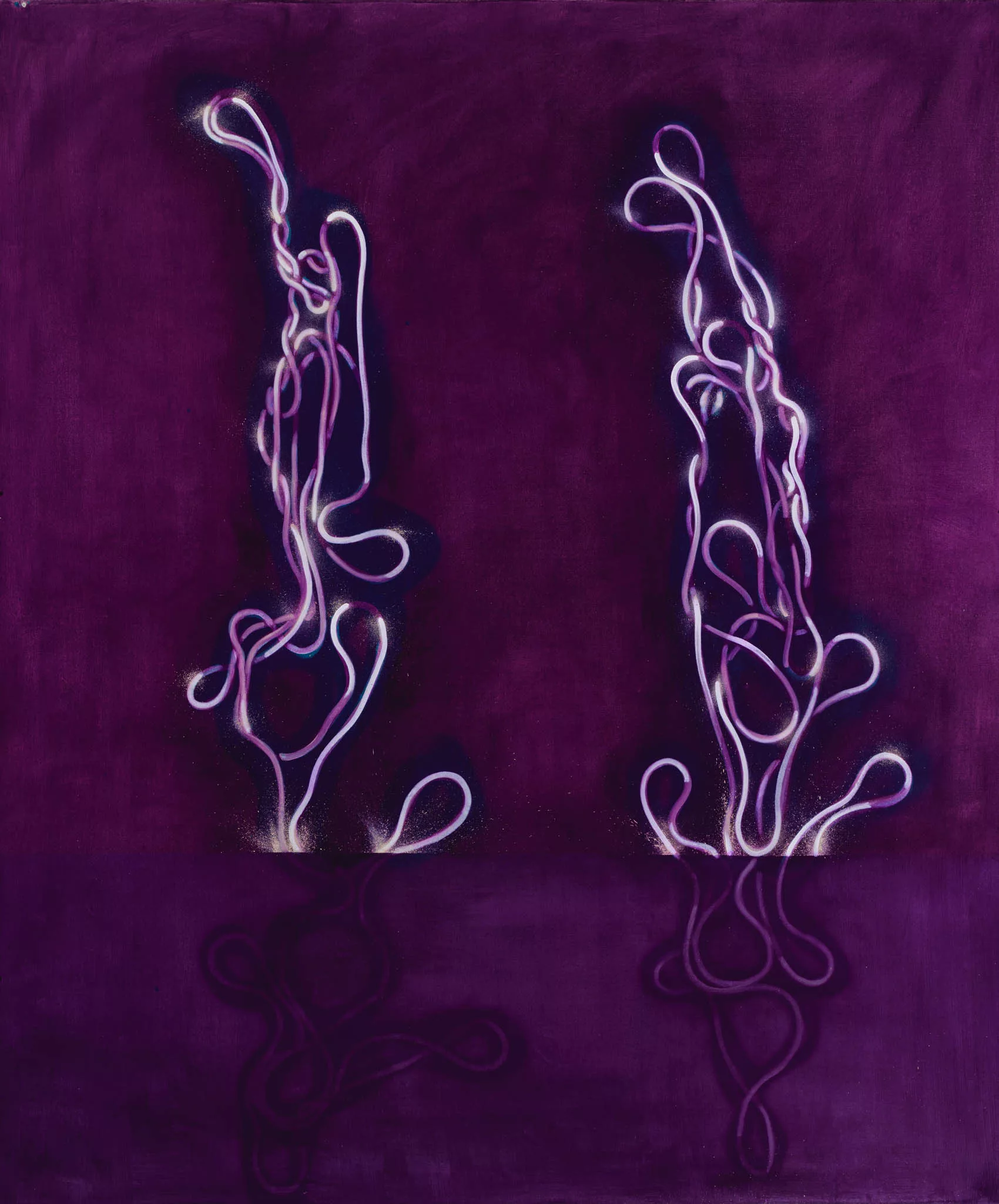
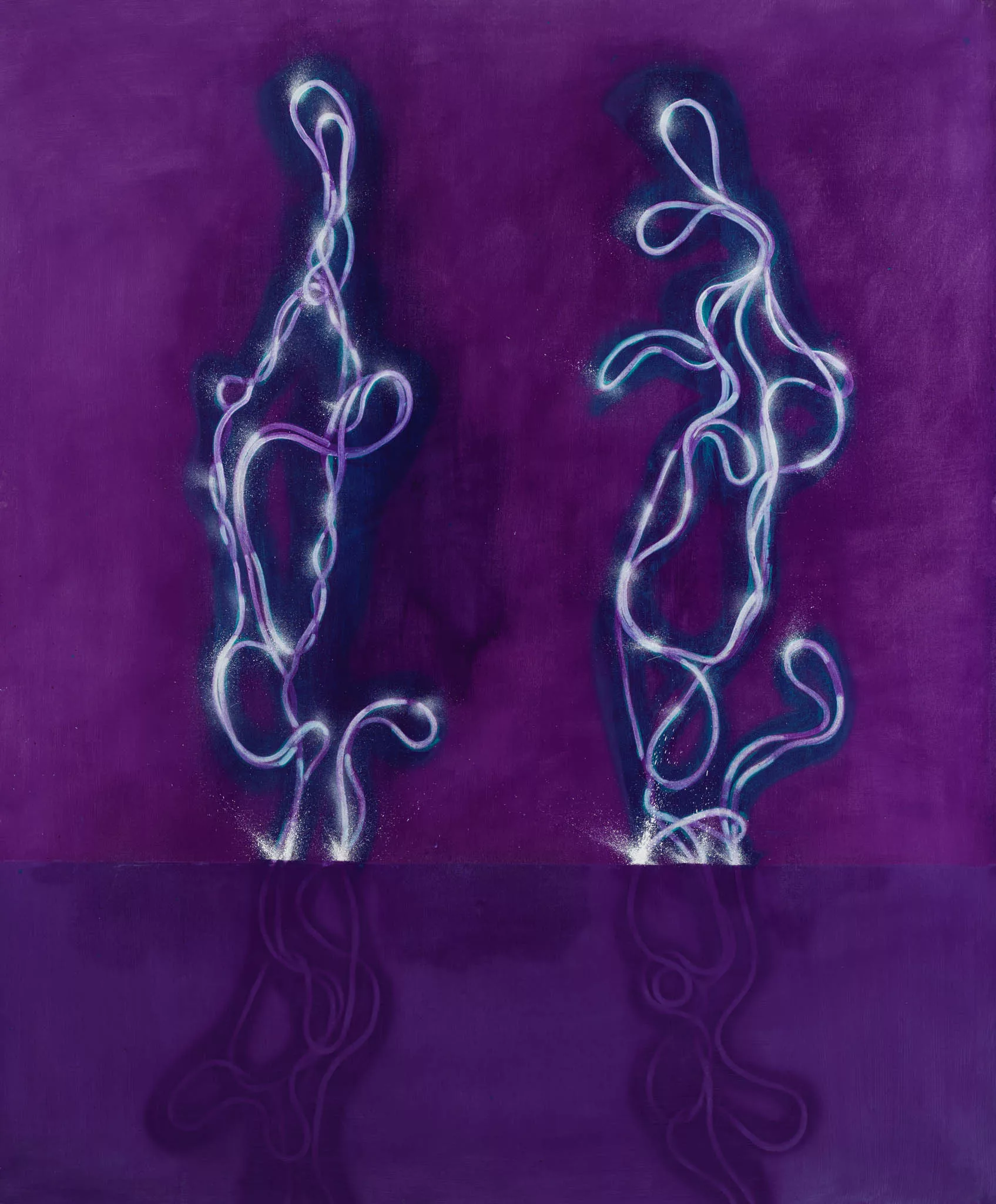
The truths of the world I seek to share through my art mutually invoke the powers of myth. The sense is in the making. Love, gambling, addiction, spirituality, and folklore occupy the rationale or illogic by which we individuate, by which we bring our core Self into focus. The indeterminate thereby takes on form through symbolism capable of mitigating the whimsicality of storm; for me, this phenomenon fuels and informs my art, a concept I’ve named duende. Thus, the duende becomes one of my key organizing principles, an all-purpose crystal, even a placebo. Another is the fantasy of desirousness in the eyes of tremendous beauty. Luck, yet another. All of our lives are charmed, and nothing highlights this more than observing sociality amidst the limitless anonymity of city life; or the static tension captured in the form of emergent singularity via a totem surfboard, a self propelled lifeline capable of jetting atop the vast indifference of the ocean. Between city and the sea, I create.
Between idea and execution preside the muses of our world which are not exteriorities from which we request inclusion and belonging, but rather they are internal figments from which we derive inner strength and the will to self-expansion. With my art, at the very least—moving transversally outside expectation, trawling chaos deeply, returning spiritual victuals—I offer a reminder of the self-guiding mythopoeic potential available to all people, and not just to those who seek dominion. Myths are getaways from inasmuch as they are gateways to dynamism and cogency. Find essential myth, often rooted in our most pronounced ironies, and its cryptic truth could yield our deliverance, whether personal zen or societal wisdom. My quest, embodied in my art, is so aspirationally marked.
—Gregory de la Haba